

Abstract:
Introduction: Zalsa, an amalgamation of Zumba and Salsa, represents a dynamic and culturally rich form of physical and psychological activity that has shown promise in building wellness and well-being at the community level. This study explored the effects of Zalsa participation on physical fitness, mental health, and social integration at a comprehensive university in a Low-Middle Income Country (LMIC) setting.
Method: Through a mixed-methods, experimental approach, the Zalsa intervention was performed through open houses at the Aga Khan University Hospital (AKUH) in Karachi, Pakistan. The intervention was open to all AKUH students, spanning July to Sept 2023. Immediately following the intervention, an online Google survey was conducted based on 20 questions in subcategories self-assessing physical/mental health, stress, social interaction, concentration, and work-life balance.
Results: Of the 107 participants, the vast majority (80%) were women in their 20s and 30s; 41% were medical students. Likert scores were high across the board, with up to 90% of respondents falling within the moderate to significant satisfaction range. The intervention was associated with high mean aggregate scores for psychological well-being (72.4 ± 19.8), work-life balance (72.7 ± 22.5), overall quality of life (79.9 ± 22.5), and future intention (75 ± 23.8), but lower for physical well-being (67.3 ± 22). The mean % score tended to be significantly higher in the over 35 years age group for all categories tested.
Conclusion: Our data supports positive influence in wellness promotion amongst university students and staff. These findings have implications for incorporating Zalsa-like wellness and well-being programs to build novel core competencies for 21st-century learners in their higher education pursuit.
Keywords: Zalsa, Burnout, Wellness, Well-being, Physical fitness, psychological well-being, social connections, Young adults, Higher education, Students, Competencies, 21st-century learners
Introduction:
The World Health Organization estimates that approximately one in eight people will experience a mental health disorder during their lifetime, with depression and anxiety being the most prevalent [1]Organization WH. WHO. Mental disorders [Internet] 2019. A crucial demographic, university going students, often encounter increased mental health difficulties as they make the transition from adolescence to adulthood. The demands of coursework contribute to elevated stress levels, as students seek to juggle their academic studies with their personal life. Furthermore, anxiety about future career prospects and financial stability adds to their overall sense of inadequacy [3]Campbell F, Blank L, Cantrell A, Baxter S, Blackmore C, Dixon J, et al. Factors that influence mental health of university.... These mental health challenges pose a substantial risk to these young adults. For instance, suicide is the third leading cause of death among 15-29-year-olds in Pakistan and continues to rise globally [5]Imran N, Naveed S, Rafiq B, Tahir SM, Ayub M, Haider, II. Pattern of Adolescent Suicides in Pakistan.... The coexistence of substance abuse disorders and the development of psychiatric issues are also concerning outcomes. It is imperative to implement integrated treatment approaches that teach stress management and social responsibility to effectively address these interconnected concerns [6]Brådvik L. Suicide Risk and Mental Disorders. Int J Environ Res Public Health.... As such, introducing movement-related activities has been demonstrated to improve both the physical and psychological well-being of individuals [7]Stults-Kolehmainen MA. Humans have a basic physical and psychological need to....
Zalsa evolved as a combination of Zumba and Salsa, representing an innovative approach to mental health intervention aimed at alleviating stress and burnout. It was first introduced during the COVID-19 pandemic when communities experienced heightened levels of stress [8]University TAK. My decade at Aga Khan University: Unveiling the essence of growth and.... Zalsa is a form of therapy that incorporates mindfulness exercises and peer support groups to redefine the delivery of mental and physical health care. Its distinct offering sets it apart from other therapies by encompassing physical, mental, and spiritual well-being in one comprehensive approach [9]BOL news. Zalsa: Journey into well-being through.... To make it more relatable to our population, the Zalsa routine has been contextualized by incorporating local music, cultural movement, and even segregation if or when needed. This makes it an adaptable and resilient model, in addition to being inclusive, diverse, equitable, and accessible [8]University TAK. My decade at Aga Khan University: Unveiling the essence of growth and..., [9]BOL news. Zalsa: Journey into well-being through....
The correlation between the physical and mental well-being of students has been extensively researched to identify its impact on academic achievement. Numerous studies have documented a positive link between engaging in physical activity and academic performance, which is believed to be attributed to enhanced intraneuronal connections resulting from such activity [10]Symons CW, Cinelli B, James TC, Groff P. Bridging student health risks and academic.... However, several studies have also indicated less robust correlations between physical activity and academic performance. Despite these conflicting findings, there remains a demonstrated positive association between physical activity, self-esteem, and a notable impact on reducing depression [11]Kayani S, Kiyani T, Wang J, Zagalaz Sánchez ML, Kayani S, Qurban H. Physical activity and academic performance..., highlighting the considerable indirect effects on academic performance that should not be overlooked.
In Pakistan, frameworks like ‘Students Health and Well-Being Project’ have been devised to tackle the growing mental health concerns among university students, but the results are yet to be seen [12]Abbasi MT, Rameez S, Tahir A, Usman R, Islam A. STUDENTS HEALTH AND WELL-BEING PROJECT, PAKISTAN.... There is currently no national strategy to combat this issue either. The clear absence of initiatives for building mental resilience traits among the student population can be seen quite evidently. For example, parks, which have been demonstrated to enhance subjective well-being, remain underutilized in the country due to maintenance issues, security concerns, and limited accessibility [13]Shams K, Kadow A. Leisure-time and subjective well-being among park visitors in urban Pakistan.... Cumulatively this reduces the existing channels for the young population to engage in physical and social well-being activities.
In recent years, activities such as Zumba and Salsa have been recognized for their positive effects in reducing the risk of mortality by enhancing cardiovascular health, improving mental well-being, and overall physical fitness [14]Domene PA, Moir HJ, Pummell E, Easton C. Salsa dance and Zumba fitness: Acute responses during community-based classes.... In high-income countries, dance is also recognized as an alternative mode of physical activity, providing a distinct avenue that incorporates enjoyment into exercise routines [15]Stults-Kolehmainen MA. Humans have a basic physical and psychological need to move the body: Physical activity as a primary drive.... Moreover, cultural dances have been utilized as part of targeted interventions, such as for Latina women, to improve their access to physical activity, and improve community engagement [17]Hovell MF, Mulvihill MM, Buono MJ, et al. Culturally Tailored Aerobic Exercise Intervention for Low-Income Latinas.... Although literature exists that describe physiological adaptations of dance, there is a necessity for further investigation into the specific connections between movement-related activities and wellness among populations in Lower Middle-Income Countries (LMIC) where resources are limited and new approaches to promoting well-being are crucial.
The objective of this research is to examine the potential impacts of Zalsa intervention on the physical, psychological, and social well-being of young adults and middle-aged individuals at a university located in an LMIC setting. We hypothesize that Zalsa participation will lead to a positive impact physically and mentally.
Methodology:
Study Design:
The study employed an experimental design with the introduction of ‘the Zalsa intervention’, followed by post-test questionnaire. Participants underwent a post-test, with a trained research assistant as part of a larger research team facilitating the intervention. The research assistant was trained by the principal investigator with standardized instructions on questionnaire administration and methods for clarifying participant queries.
Study Intervention:
The intervention comprised of Zalsa open houses conducted over three months. Twelve sessions were conducted over this time period with new participants in each session. These events aimed to promote social interaction and community engagement among participants in addition to physical wellness and well-being [8]University TAK. My decade at Aga Khan University: Unveiling the essence of growth and..., [9]BOL news. Zalsa: Journey into well-being through.... Each Zalsa intervention was a 1-hour session that started with a vocalization of dedication, gratitude, and safety instructions from the lead facilitator who is a trained movement coach. This would be followed by meditative yoga-like stretching and deep breathing before the combination of high-impact (cardio through contextualized Zumba) and low-impact (coordination through Salsa or other Latin American dance/workout forms) workouts (Figure 1). The session would end with cooling down, stretching, and deep breathing to music. Each session epitomized inclusion, diversity, and equity, aimed at fostering social interactions and community engagement among participants. The low-cost and low-tech innovative approach to wellness/well-being was characterized by charging only Rs. 1000 (~ $3) per session; access to WiFi and speakers in an empty classroom or conference space was all that was required from a technological perspective.
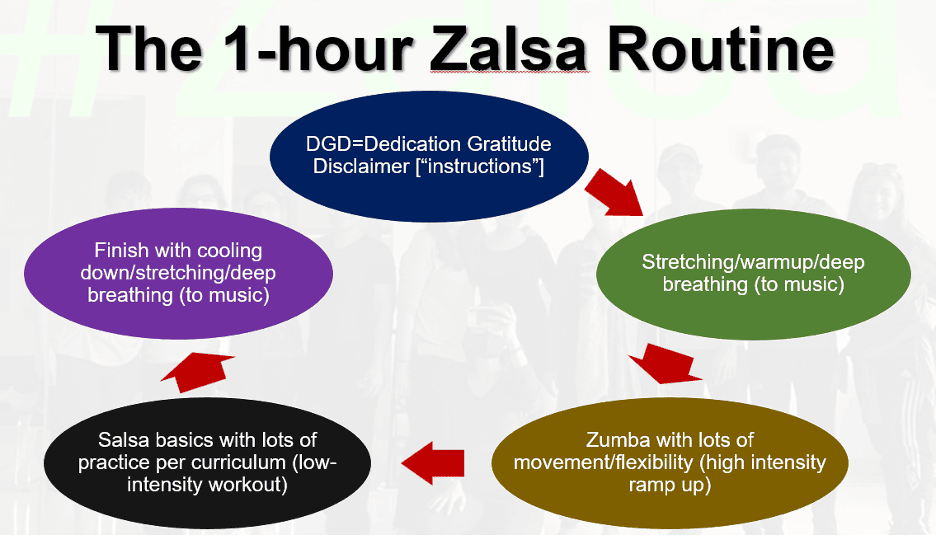
Figure 1: Zalsa is a combination of low and high-impact wellness and well-being routine that has components of meditative mindful practice (yoga-like stretching and deep breathing), cardio, and coordination, as shown here (8, 9).
Study Population/Participants and Setting:
The study population comprised students and employees of the Aga Khan University Hospital (AKUH). This university with its affiliated teaching hospital was chosen due to its diverse population of employed and unemployed (part-time) staff including students, thus providing a representative sample.
Eligibility Criteria:
All students at the AKUH, irrespective of age, gender, scholarship status, or chosen discipline (medicine, nursing, arts/sciences, education, epidemiology/biostatistics/public health, etc.) were eligible for inclusion. We also opened the study enrollment to non-students, including faculty, administration, and others across the university and university hospital. Any participant unwilling to pay for the session or consent to the evaluation of the intervention was still encouraged to participate in the fun activity inherent in the Zalsa routine. Exclusion criteria for this study were people that had disabilities that prevented them from participating in the dance movements (physical deformities, people with cognitive impairments) and people who were already familiar and actively performing the Zalsa movements on their own.
Piloting of Questionnaire:
Before commencing the main study, both the intervention and questionnaire underwent a pilot testing phase with CCIT (Critical Creative Innovative Thinking) fellows. For the pilot testing, a flat rule of thumb [18]Kunselman AR. A brief overview of pilot studies and their sample size justification... was used to select a sample size of 21 individuals. One Zalsa session was held which followed the same format as described earlier. Feedback regarding cultural adaptations such as gender pairing, tune selection, and time management was provided as a fireside chat after the session. This pilot exercise played a crucial role in refining both the intervention approach and the phrasing of questions within the data collection tool for the primary study. The 20-question survey has been added as a supplementary file. Overall quality of life was measured by directly asking the participants if Zalsa has an impact on their overall well-being, in the questionnaire.
Sample Size:
No studies have been published to determine the impact on the wellness and well-being of our kind of intervention for young adults and middle-aged individuals in higher education institutions. Hence, we planned to pilot a survey to evaluate the data's reliability. Cronbach's Alpha Coefficient was obtained to evaluate the reliability of knowledge to collect data prospectively on 21 participants. After analyzing the pilot survey, the overall reliability of the data from the five-point Likert scale results was found to be appropriately 0.75 [95% C.I: 0.68 to 0.86]. At a 5% level of significance and 80% power of the test, we took 0.6 as a minimally acceptable level of reliability and 0.75 as the expected level of reliability, from pilot testing in two replicates per subject. A sample size of n=80 participants was determined for this study. Therefore, this was the minimum sample size that must be generated during the study period of three months. Due to the potential refusals and losses in the study sample, we increased the sample size estimate by 30% [19]Martínez-Mesa J, González-Chica DA, Bastos JL, Bonamigo RR, Duquia RP. Sample size: how many participants do I need..., thus 107 participants were selected. The study population was selected based on convenience sampling, as they were approached by the authors of the study. The required sample size was calculated using Pass Software Version 2.
Study Outcomes:
(I) To determine and assess the impact of Zalsa on physical fitness (parameters such as flexibility, strength, body toning, stamina), mental health outcomes (such as stress reduction, concentration skills, self-esteem), and social connections (such as work-life balance, self-care practices). (II) To identify any potential differences in the impact of Zalsa on wellness and well-being between young adults and middle-aged individuals.
Study Procedure:
Following the intervention phase, participants were administered an online survey hosted on the Google platform. The survey consisted of 20 questions aimed at evaluating various aspects, including physical and mental health, stress levels, social interaction, concentration, and work-life balance. Additionally, demographic information such as age, gender, and occupation were collected.
Study Duration:
The study took place over a period of three months from July to September 2023.
Data Collection and Statistical Analysis:
Data collection was conducted through an online Google Form that was filled on-site, with subsequent compilation into Microsoft Excel for analysis. After quality checking through exclusion of missing data, data analysis was performed with the help of IBM SPSS version 21 and R version 4.2.3. To understand the potential benefits of Zalsa in different domains, categorical response data were summarized as frequencies and percentages. The continuous variables were expressed as mean and standard deviation (S.D). Interclass correlation was calculated for the validity of the scale, while Cronbach's Alpha Coefficient was used to evaluate the reliability of knowledge and attitude, of the self-dependent scale as appropriate. All statistical tests were performed at a 5% significance level. Results were presented in graphs and tables.
Ethical Considerations:
The study received an exemption from the Ethical Review Committee (ERC) at Aga Khan University based on the study design and intervention's nature (ERC# 2023-9008-25637). Informed consent was obtained from all participants, who were assured of confidentiality and anonymity throughout the study. Participant privacy was ensured during data collection, allowing the participants to enter data without any interference. No identifying information of the participants were used.
Result:
A total of 107 individuals participated in the research. Their average age was 29.37 years with a standard deviation of ± 7.11, ranging from 18 to 58 years old. The majority fell within the age bracket of 26 to 35 years old, constituting 52 (49%) individuals. Female participants outnumbered males, with a female-to-male ratio of 3:1 accounting for a total of 81 (76%) individuals. Medical students made up the largest subgroup with a representation of 44 (41%), followed by AKUH staff with 34 (32%), nurses with 10 (9%), and faculty members with 5 (4.5%); there were also 3 research fellows and 11 "other" members making up participation percentages as detailed in Table 1.
Table 1: Descriptive and demographics characteristics of the participants of Zalsa research study conducted at Aga Khan University and Aga Khan University Hospital, July to September 2023.
| Descriptive and & Demographic characteristics | Total |
| N | 107 |
| Age in Years | 29.37 ± 7.11 [18 -58] |
| Age Groups | |
| 18-25 Years | 34 (32) |
| 26-35 Years | 52 (49) |
| >35 Years | 21 (20) |
| Gender | |
| Male | 26 (24) |
| Female | 81 (76) |
| Designation | |
| AKUH Staff | 34 (32) |
| Medical student | 44 (41) |
| Research fellow | 3 (3) |
| Nursing | 10 (9) |
| AKUH Faculty/Outside | 5 (5) |
| Businessmen | 6 (6) |
| Art/Humanities/Social Science | 3 (3) |
| Engineer | 2 (2) |
| AKUH Participant | |
| Yes | 91 (85) |
| No | 16 (15) |
| Medical Student | |
| Yes | 44 (41) |
| No | 63 (59) |
The Intraclass Correlation Coefficient (ICC) score of the survey was calculated at 0.54 with an overall reliability of 0.954, indicating consistent results with some degree of variability. Similarly, the ICC scores for all subscales range from 0.542 to 0.748, with reliability scores between 0.834 to 0.922. A high ICC score of greater than 0.5 indicates convergent validity of our scale (2). These findings are shown in Table 2.
Table 2: Comprehensive evaluation of well-being, work-life balance, and future intentions through reliability analysis.
| Reliability Analysis | Intraclass correlation [95% C.I] |
Reliability [95% C.I] |
| Overall Reliability | 0.54 [0.472 to 0.615] | 0.959 [0.947 to 0.97] |
| Physical well-being | 0.604 [0.518 to 0.671] | 0.911 [0.883 to 0.935] |
| Psychological well-being | 0.542 [0.463 to 0.624] | 0.892 [0.858 to 0.921] |
| Work-life balance | 0.748 [0.681 to 0.808] | 0.922 [0.895 to 0.944] |
| Quality of life and Future intention | 0.716 [0.609 to 0.797] | 0.834 [0.757 to 0.887] |
| ICC: Intraclass correlation | ||
| Reliability: Cronbach Alpha at 95% C.I | ||
Through the participants' data, we assessed their well-being and quality of life in relation to their age, occupation, and affiliation. The results revealed a contrast between different groups. Individuals aged 18-25 years exhibited a lower quality of life (69.12 ± 22.96) compared to those over 35 years (72.16 ± 14.52). Those in the age group of 26-35 years showed the highest psychological well-being (72.87 ± 20.19), while individuals above 35 years displayed the highest levels of physical well-being (69.56 ± 15.67). Among the various professions, nurses reported the highest overall quality of life (75.83 ± 27.76), whereas faculty members and external participants had the lowest scores (66.67 ± 24.32). Engineering professionals demonstrated superior physical well-being with a score of 76.79 ± 7.58, while those in art/humanities/social sciences exhibited higher levels of psychological well-being at 75 ± 12.88. These findings from Table 3 summarize how age, job type, and affiliation influence determining one's state of well-being and quality of life.
Table 3: Average summary of well-being, work-life balance, and quality of life, by age group, discipline/designation, and AKUH participation status.
| Physical well-being | Psychological well-being | Work-life balance | Overall quality of life | |
| Age Group | ||||
| 18-25 Years | 66.81 ± 24.28 | 70.9 ± 22.23 | 70.04 ± 25.64 | 69.12 ± 22.96 |
| 26-35 Years | 66.76 ± 23.13 | 72.87 ± 20.19 | 73.92 ± 21.96 | 70.73 ± 19.5 |
| >35 Years | 69.56 ± 15.67 | 73.81 ± 14.91 | 73.81 ± 18.5 | 72.16 ± 14.52 |
| Discipline/designation | ||||
| AKUH Staff | 71.11 ± 17.06 | 75.11 ± 16.15 | 75.92 ± 17.95 | 73.73 ± 15.58 |
| Medical student | 63.56 ± 23.85 | 70.13 ± 20.94 | 70.88 ± 23.69 | 67.74 ± 20.77 |
| Research fellow | 61.9 ± 38.52 | 66.67 ± 33.76 | 62.5 ± 37.5 | 63.89 ± 36.03 |
| Nursing | 75 ± 27.92 | 77.14 ± 28.13 | 75 ± 31.6 | 75.83 ± 27.76 |
| AKUH Faculty/Outside | 59.29 ± 28.75 | 70 ± 25.2 | 73.75 ± 25.54 | 66.67 ± 24.32 |
| Business | 72.02 ± 17.12 | 73.21 ± 13.32 | 78.13 ± 18.43 | 73.84 ± 14.47 |
| Art/Humanities/Social Science | 57.14 ± 9.45 | 75 ± 12.88 | 66.67 ± 13.01 | 66.2 ± 11.56 |
| Engineering | 76.79 ± 7.58 | 62.5 ± 2.53 | 50 ± 8.84 | 65.28 ± 3.93 |
| AKUH participant | ||||
| Yes | 66.8 ± 22.67 | 72.17 ± 20.78 | 72.87 ± 22.58 | 70.24 ± 20.5 |
| No | 70.31 ± 18.93 | 73.88 ± 13.6 | 71.48 ± 22.47 | 71.96 ± 14.81 |
In our research, we examined the level of interest among individuals in participating in activities aimed at enhancing both physical and mental health. The results revealed that 51% of participants showed significant or moderate interest in activities to improve their physical health, while 49% expressed a similar level of interest in activities for improving their mental well-being. Furthermore, 41% indicated significant interest in experiencing improved stamina through participation in Zalsa, with 33% believing that it would result in enhanced muscular strength. Stress reduction (40%), relaxation (45%), and a sense of contentment (42%) were identified as the primary factors driving interest in Zalsa based on our survey findings. These findings underscore the strong desire for activities addressing holistic well-being encompassing physical and mental aspects. The following results are depicted in Figure 2.
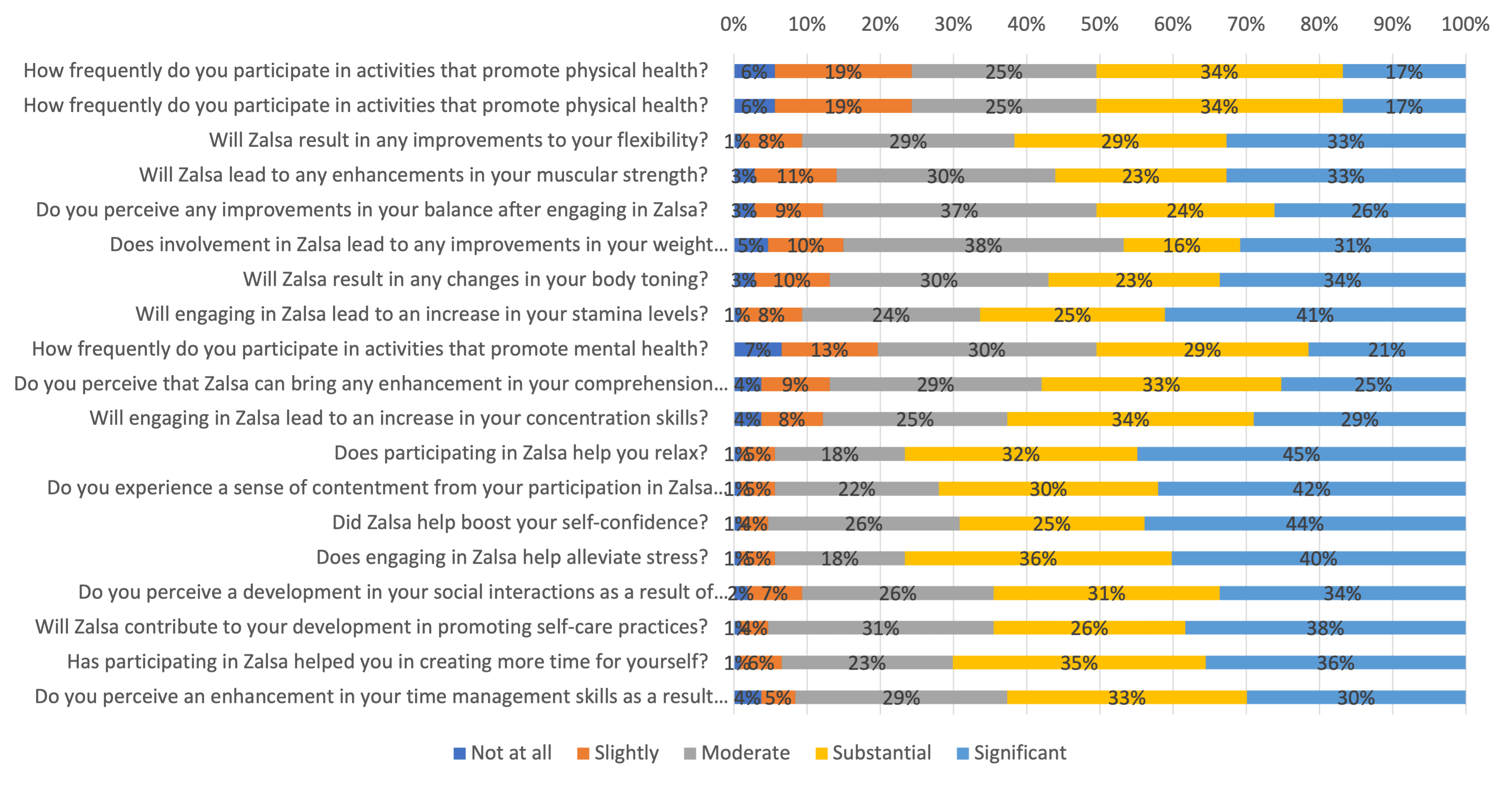
Figure 2: Stack bar chart for the interest in physical health activities based on Zalsa participation status. Figure illustrates the distribution of participants' interest in physical health activities categorized by their Zalsa participation status. Each bar in the chart represents the total percentage of participants interested in physical health activities, segmented based on the level of interest. The color coding within each bar represents different levels of interest, ranging from "Not at all" to "Significant," with darker shades (dark blue) indicating lower interest levels and lighter shades representing higher interest levels (light blue).
Lastly, we also evaluated the combined ratings for each domain of wellness included in our survey. The score for “physical well-being” was 67.3 ± 22, while both “psychological well-being” and “work-life balance” displayed similar scores at 72.4 ± 19.8 and 72.7 ± 22.5, respectively. Moreover, "future intent" to continue Zalsa scored 75 ± 23.8. The highest mean score across all areas indicates "overall well-being" at 79.9 ± 22.5. These findings along with their respective confidence intervals are shown in Table 3.
Discussion:
The study's findings addressed the mental health challenges experienced by college students in an LMIC context. It concentrated on the novel Zalsa intervention, demonstrating encouraging outcomes related to reducing stress, enhancing well-being, and improving social relationships. This research's importance lies in its potential to introduce an original, culturally relevant intervention that not only encourages physical activity but also integrates mindfulness practices and peer assistance, offering a holistic approach to promoting wellness and well-being.
The demographic characteristics indicate that the majority of participants were women, with a female-to-male ratio of 3:1. This gender imbalance in participation is consistent with existing literature suggesting that women are more inclined to participate in activities related to well-being and seek interventions for improving their health [21]Craft BB, Carroll HA, Lustyk MK. Gender Differences in Exercise Habits.... However, we recognize that the gender imbalance in our sample might stem from convenience sampling, rather than solely from behavior patterns. Furthermore, the prevalence of medical students among the participants emphasizes the importance of addressing well-being issues within this specific group, given the high levels of stress and demanding nature of medical education [22]Ragab EA, Dafallah MA, Salih MH, Osman WN, Osman M, Miskeen E, et al.... However, the authors' academic network may have introduced recruitment bias towards medical students during study advertisement. Future studies could look into the patterns of medical students opting for such stress-release activities.
Regarding age groups, differences were observed; younger individuals (18-25) reported a lower quality of life compared to older age groups. Meanwhile, those aged 26-35 years displayed higher levels of psychological well-being, while individuals over 35 years demonstrated greater physical well-being. These patterns align with other studies showing that younger individuals (aged 18-25 years) report lower quality-of-life scores than older age groups due to challenges associated with early adulthood such as academic pressures and career uncertainties [23]Birditt KS, Turkelson A, Fingerman KL, Polenick CA, Oya A..., [24]Wood D, Crapnell T, Lau L, Bennett A, Lotstein D, Ferris M.... However, the small sample sizes within each age group do limit generalizability. Therefore, these findings are exploratory and do not represent conclusive trends.
Additionally, psychological, and physical well-being are linked to physical activity as middle-aged individuals engage in various activities leading them to experience higher psychological well-being [25]Granero-Jiménez J, López-Rodríguez MM, Dobarrio-Sanz I, Cortés-Rodríguez AE.... Moreover, when comparing occupations, nurses reported the highest overall quality of life. This can be attributed to factors such as job satisfaction, social support networks within the healthcare profession, and a sense of purpose derived from caregiving roles [26]Flaubert JL, Le Menestrel S, Williams DR, Wakefield MK.... These findings show the importance of considering demographic factors when designing targeted interventions for improving well-being.
The participants demonstrated a strong interest in Zalsa across all the aspects evaluated, indicating its potential as an effective method for relaxation (75%) and improving stamina (66%). This is consistent with prior studies that emphasize the advantages of movement-based approaches in boosting mood and reducing stress, further supporting Zalsa's contribution to enhancing overall well-being [27]Mahindru A, Patil P, Agrawal V. Role of Physical Activity on Mental Health and Well-Being.... Zalsa has multiple dimensions that can impact quality of life. It is currently practiced in various community settings such as gyms, clubs, and as an extracurricular course at the medical school of AKUH. This activity fosters a sense of community among participants and provides a socializing opportunity while engaging in a meaningful pursuit. Some individuals view it as an avenue for learning Latin American dance for creative expression, while others see it as a form of cardio through Zumba. The success of this initiative is demonstrated by positive participant evaluations and a request from the Associate Dean for the repeat offering of the Zalsa course this year. As one student mentioned in their feedback, "It was a good addition to my schedule and something to look forward to every week. It allowed me to unwind and befriend individuals from different backgrounds." While our study has focused on the direct impacts of Zalsa, there are still indirect effects yet unexplored.
Currently no consensus exists for measuring well-being or quality of life objectively [28]Neumann S, Quinting J, Rosenkranz A, de Beer C, Jonas K, Stenneken P.... Instead recommendations have been put forth to using existing scales with consideration of the context in which they are implemented in, as a one size fits all approach is not possible [29]VanderWeele TJ, Trudel-Fitzgerald C, Allin P, Farrelly C.... To assess well-being for the Zalsa sessions in our cultural context, we developed a comprehensive scale by drawing on existing scales from the literature and combining them to evaluate physical, emotional, and spiritual well-being. The assessment of the survey's reliability, as indicated by the Cronbach’s alpha values, suggests that the survey instrument used in the study is reliable and consistent in measuring the intended constructs for each domain of well-being. Moreover, the high ICC score demonstrates convergent validity, as each domain of the well-being measure reports a correlation score greater than 0.5. However, assessing divergent validity using a different scale was not possible, as the authors were unable to reach a consensus on an appropriate alternate scale to include.
Our study has several limitations. Firstly, it was carried out at a single institution in Karachi, Pakistan, which could restrict the applicability of the findings to other universities or diverse cultural contexts. Secondly, the sample size was relatively small and may not accurately represent the entire university population; there might have been selection bias as well, especially with most participants being medical students. The female to male 3:1 gender disbalance as well as convenience sampling were all limitations to the study. Thirdly, the study relied on self-reported data at a single time point. The presence of other participants in the room during survey completion may have influenced the responses, potentially leading to response bias, and affecting the accuracy of the results. Also, the small subgroup analyses presented in this study are not generalizable due to their limited sample sizes, making them descriptive findings rather than inferential statistics. Furthermore, the study duration of three months may not capture long-term effects of Zalsa participation on well-being, and follow-up assessments over an extended period would provide a better understanding of its impact. Additionally, while the survey instrument demonstrated good reliability, it may not have captured all relevant factors influencing well-being. Lastly, the study did not include a control group, making it challenging to attribute the observed changes in well-being solely to Zalsa participation.
As future recommendations, longitudinal studies (6 months to 1 year) could assess the long-term impact of such dance-based interventions on emotional well-being, considering larger and more diverse samples with multivariate analysis to yield more robust findings, including control groups to isolate the findings to Zalsa. Additionally, the utilization of more advanced assessment tools to evaluate participants' emotional states before and after the wellness intervention would be valuable. The "MoodBoard" instrument is a structured self-report survey developed and internally validated for the efficient and non-redundant assessment of participants' moods. Specifically, it is designed to evaluate a range of mood-related dimensions, including stress levels, anxiety, relaxation states, and motivational drives. It could be used as a survey in future experimental studies [30]Syed Waqas, Zunaira Namal, Ahmed Raheem, Asad I Mian. Innovating Emergency Medicine.... Moreover, a randomized controlled trial in the future could provide a more comprehensive understanding of the Zalsa intervention. Finally, Zalsa or similar movement activities have the potential to improve well-being in local institutions. This activity was conducted at a renowned hospital in the region and is part of the extracurricular program. Other institutions could take inspiration from such initiatives as part of their professional development programs.
The anticipation of Zalsa's multifaceted impact on well-being is grounded in the understanding of physical activity's myriad benefits. Hypothesized effects include improvements in physical attributes, cognitive faculties, emotional well-being, and social interactions [8]University TAK. My decade at Aga Khan University: Unveiling the essence of growth and..., [31]Mandolesi L, Polverino A, Montuori S, Foti F, Ferraioli G, Sorrentino.... However, it is important to acknowledge that individual responses to Zalsa participation may vary. While most participants experience positive effects, some individuals may have differing responses. Factors such as individual fitness levels, pre-existing medical conditions, and personal preferences can influence the outcomes. Therefore, while we anticipate overall beneficial effects, it is crucial to recognize the potential for variability in the outcomes experienced by participants.
Despite these limitations, the study provides valuable insights into the potential benefits of Zalsa for promoting physical and mental well-being among university students and middle-aged individuals in a well-recognized and highly respected professional organization in Pakistan, and highlights avenues for future research in this area.
Conclusion:
Our pilot study results show hypothesized benefits in Zalsa being associated with promoting wellness. By incorporating these programs into the curriculum, individuals in academic institutions can become equipped with crucial abilities for professional development while nurturing their overall well-being. Further research is required to curate Zalsa into an evidence-based intervention for a transformative shift in higher education.
Declaration:
- Ethics approval and consent to participate: The study received an exemption from the Ethical Review Committee (ERC) at Aga Khan University based on the study design and intervention's nature (ERC# 2023-9008-25637). Informed consent was obtained from all participants, who were assured of confidentiality and anonymity throughout the study.
- Consent for publication: Consent from all authors has been taken.
- Availability of data and materials: The datasets used and/or analyzed during the current study is available in supplementary files.
- Competing interests: Not Applicable
- Funding: No funding of any sort was used.
- Authors' contributions: We affirm that all individuals listed as authors agree that they have met the criteria for authorship and agree to the study's conclusion. Asad Mian, Mahreen Sulaiman managed the Zalsa session activity, generation of the research question and reviewed all the information in the manuscript before submission. Zunaira Namal and Asad Mian collected the data on the site. Syed Waqas and Zeeshan Ahsan wrote the manuscript. Syed Waqas, Zunaira Namal and Aisha Pervaiz performed the literature search. Ahmed Raheem performed the data analysis. Syed Waqas managed the manuscript for content and clarity and made necessary revisions before submission. Zunaira Namal made the submission to the journal.
- Authors' information: Syed Waqas and Zeeshan Ahsan are students at Aga Khan University (AKU), specializing in medicine and epidemiology/biostatistics respectively. Aisha Pervaiz and Zunaira Namal are researchers at CCIT Forum AKU, led by Mahreen Sulaiman, the Co-Director. Ahmed Raheem provides expertise in biostatistics within AKU's Emergency Medicine Department, under the guidance of Asad Mian, Professor of Emergency Medicine and Director of CCIT Forum.
Acknowledgment: We would like to acknowledge the support of all authors and employees and staff of Emergency Department through which we are able to have this study.
Ethics approval and consent to participate
The study received an exemption from the Ethical Review Committee at Aga Khan University (ERC# 2023-9008-25637).
Consent for publication
The manuscript reports that informed consent was obtained from all participants and that confidentiality and anonymity were assured.
Availability of data and materials
The anonymized study data are not publicly available. De-identified summary materials may be available from the corresponding author on reasonable request, subject to institutional approval.
Competing interests
The authors declare no commercial or financial conflict of interest.
Funding
No funding was received for this research.
Authors' contributions
Syed Waqas: Writing - original draft; Writing - review and editing; Investigation; Data curation; Methodology; Formal analysis; Project administration | Zeeshan Ahsan: Writing - review and editing; Writing - original draft; Investigation; Data curation; Methodology; Project administration | Aisha Pervaiz: Writing - original draft; Investigation; Supervision; Data curation; Visualization | Zunaira Namal: Writing - original draft; Writing - review and editing; Data curation; Project administration; Visualization; Software; Investigation | Mahreen Sulaiman: Writing - review and editing; Conceptualization; Investigation; Data curation; Project administration | Ahmed Raheem: Writing - original draft; Software; Data curation; Validation; Visualization; Formal analysis | Asad I Mian: Writing - review and editing; Conceptualization; Investigation; Data curation; Methodology; Supervision; Project administration; Visualization; Resources; Formal analysis
REFERENCES
1. Organization WH. WHO. Mental disorders [Internet] 2019 [cited 2022 2022]. Available from: https://www.who.int/news-room/fact-sheets/detail/mental-disorders.
2. Global, regional, and national burden of 12 mental disorders in 204 countries and territories, 1990-2019: a systematic analysis for the Global Burden of Disease Study 2019. Lancet Psychiatry. 2022;9(2):137-50.
3. Campbell F, Blank L, Cantrell A, Baxter S, Blackmore C, Dixon J, et al. Factors that influence mental health of university and college students in the UK: a systematic review. BMC Public Health. 2022;22(1):1778.
4. Pedrelli P, Nyer M, Yeung A, Zulauf C, Wilens T. College students: mental health problems and treatment considerations. Academic psychiatry. 2015;39:503-11.
5. Imran N, Naveed S, Rafiq B, Tahir SM, Ayub M, Haider, II. Pattern of Adolescent Suicides in Pakistan: A content analysis of Newspaper reports of two years. Pak J Med Sci. 2023;39(1):6-11.
6. Brådvik L. Suicide Risk and Mental Disorders. Int J Environ Res Public Health. 2018;15(9).
7. Stults-Kolehmainen MA. Humans have a basic physical and psychological need to move the body: physical activity as a primary drive. Frontiers in Psychology. 2023;14:1134049.
8. University TAK. My decade at Aga Khan University: Unveiling the essence of growth and purpose AKU23 July 2023 [cited 2023 2023]. Available from: https://www.aku.edu/blogs/pages/detail-page.aspx?pid=42.
9. NEWS B. Zalsa: Journey into well-being through Zumba and Salsa BOL news2022 [cited 2022 2022]. Available from: https://www.bolnews.com/oped/zalsa-journey-into-wellbeing-through-zumba-and-salsa/.
10. Symons CW, Cinelli B, James TC, Groff P. Bridging student health risks and academic achievement through comprehensive school health programs. J Sch Health. 1997;67(6):220-7.
11. Kayani S, Kiyani T, Wang J, Zagalaz Sánchez ML, Kayani S, Qurban H. Physical activity and academic performance: the mediating effect of self-esteem and depression. Sustainability. 2018;10(10):3633.
12. Abbasi MT, Rameez S, Tahir A, Usman R, Islam A. STUDENTS HEALTH AND WELL-BEING PROJECT, PAKISTAN. Journal of Pakistan Psychiatric Society. 2022;19(03).
13. Shams K, Kadow A. Leisure-time and subjective well-being among park visitors in urban Pakistan: The mediating role of health satisfaction. SN Social Sciences. 2021;1(6):149.
14. Domene PA, Moir HJ, Pummell E, Easton C. Salsa dance and Zumba fitness: Acute responses during community-based classes. J Sport Health Sci. 2016;5(2):190-6.
15. Stults-Kolehmainen MA. Humans have a basic physical and psychological need to move the body: Physical activity as a primary drive. Front Psychol. 2023;14:1134049.
16. Alpert PT. Alternative Exercise May Be Attractive to More Individuals. Home Health Care Management & Practice. 2010;22(4):301-304.
17. Hovell MF, Mulvihill MM, Buono MJ, et al. Culturally Tailored Aerobic Exercise Intervention for Low-Income Latinas. American Journal of Health Promotion. 2008;22(3):155-163.
18. Kunselman AR. A brief overview of pilot studies and their sample size justification. Fertil Steril. 2024;121(6):899-901.
19. Martínez-Mesa J, González-Chica DA, Bastos JL, Bonamigo RR, Duquia RP. Sample size: how many participants do I need in my research? An Bras Dermatol. 2014;89(4):609-615.
20. Fornell C, Larcker DF. Evaluating Structural Equation Models with Unobservable Variables and Measurement Error. Journal of Marketing Research. 1981 Feb;18(1):39.
21. Craft BB, Carroll HA, Lustyk MK. Gender Differences in Exercise Habits and Quality of Life Reports: Assessing the Moderating Effects of Reasons for Exercise. Int J Lib Arts Soc Sci. 2014;2(5):65-76.
22. Ragab EA, Dafallah MA, Salih MH, Osman WN, Osman M, Miskeen E, et al. Stress and its correlates among medical students in six medical colleges: an attempt to understand the current situation. Middle East Current Psychiatry. 2021;28(1):75.
23. Birditt KS, Turkelson A, Fingerman KL, Polenick CA, Oya A. Age Differences in Stress, Life Changes, and Social Ties During the COVID-19 Pandemic: Implications for Psychological Well-Being. Gerontologist. 2021;61(2):205-16.
24. Wood D, Crapnell T, Lau L, Bennett A, Lotstein D, Ferris M, et al. Emerging adulthood as a critical stage in the life course. Handbook of life course health development. 2018:123-43.
25. Granero-Jiménez J, López-Rodríguez MM, Dobarrio-Sanz I, Cortés-Rodríguez AE. Influence of Physical Exercise on Psychological Well-Being of Young Adults: A Quantitative Study. Int J Environ Res Public Health. 2022;19(7).
26. Flaubert JL, Le Menestrel S, Williams DR, Wakefield MK, National Academies of Sciences E, Medicine. Supporting the Health and Professional Well-Being of Nurses. The Future of Nursing 2020-2030: Charting a Path to Achieve Health Equity: National Academies Press (US); 2021.
27. Mahindru A, Patil P, Agrawal V. Role of Physical Activity on Mental Health and Well-Being: A Review. Cureus. 2023;15(1):e33475.
28. Neumann S, Quinting J, Rosenkranz A, de Beer C, Jonas K, Stenneken P. Quality of life in adults with neurogenic speech-language-communication difficulties: A systematic review of existing measures. J Commun Disord. 2019 May;79:24–45.
29. VanderWeele TJ, Trudel-Fitzgerald C, Allin P, Farrelly C, Fletcher G, Frederick DE, et al. Current recommendations on the selection of measures for well-being. Prev Med (Baltim). 2020 Apr;133:106004.
30. Syed Waqas, Zunaira Namal, Ahmed Raheem, Asad I Mian. Innovating Emergency Medicine: Generative AI, Narrative Medicine, and Human-Centered Design. ConductScience in Health innovation. 2025 Apr 26;(2).
31. Mandolesi L, Polverino A, Montuori S, Foti F, Ferraioli G, Sorrentino P, et al. Effects of Physical Exercise on Cognitive Functioning and Well-being: Biological and Psychological Benefits. Front Psychol. 2018;9:509.