

INTRODUCTION
In the rapidly evolving field of healthcare information systems, the application of network analysis has become increasingly vital [1]Brunson JC, Laubenbacher RC: Applications of network analysis to routinely collected health care data: a systematic review. Journal of the American Medical Informatics Association. 2017, 25:210-221. 10.1093/jamia/ocx052. This method explores the structure of a network by examining the relationships and interactions between nodes, such as individuals, groups, or organizations, and the ties or edges that connect them [4]Hevey D: Network analysis: a brief overview and tutorial. Health Psychol Behav Med. Sep. 25:301-328. 10.1080/21642850.2018.1521283. Network analysis integrates methodologies from diverse fields such as mathematics, sociology, and public health. This multifaceted approach is crucial for visualizing and interpreting complex relationships within healthcare data, particularly in today's information-centric health services environment. Network analysis has been utilized to understand the structure of medical care services, leading to the revelation of previously unknown patterns of care [5]Niyirora J, Aragones O: Network analysis of medical care services. Health Informatics J. Sep. 2020, 26:1631-1658. 10.1177/1460458219887047.
A recent study in the field of healthcare information systems has made a notable contribution by applying network analysis to the study of academic health center websites in the United States [6]He S, Chen D, Black KC, et al.: Network Analysis of Academic Medical Center Websites in the United States. Scientific Data. 202304282023, 10:245. 10.1038/s41597-023-02104-3. This research, involving an in-depth examination of a large number of webpages, demonstrated the effectiveness of network analysis in structuring digital healthcare spaces to be more user-oriented. The methodology used in this study, which focused on categorizing and linking related healthcare services, has provided valuable insights into making complex healthcare information systems easier to navigate and more accessible, underscoring the utility of network analysis in improving the usability of healthcare digital platforms.
Despite these advancements, global healthcare networks continue to face disparities in digital resource accessibility. Studies show that high-income countries disproportionately shape online healthcare collaborations, leaving lower-income countries underrepresented [7]Yao R, Zhang W, Evans R, et al.: Inequities in health care services caused by the adoption of digital health technologies: scoping review. J Med Internet Res. 2022 Mar;24(3):e34144. 10.2196/34144. This further increases existing health inequities by limiting the spread of critical information, best practices, and knowledge-sharing opportunities. Additionally, many regions lack the digital infrastructure necessary to fully engage in global healthcare initiatives, decreasing their ability to contribute to and benefit from international collaborations [8]Monlezun DJ, Omutoko L, Oduor P, et al.: Digitalization of health care in low- and middle-income countries. Bull World Health Organ. 2025 Feb 1;103(2):148-154. 10.2471/BLT.24.291643. Addressing these disparities is essential for building a more equitable and interconnected global healthcare network.
Building upon this foundation, our research takes network analysis into a new domain: the digital ecosystem of emergency medicine organizations. We employ a systematic, automated approach to map and analyze their global network, aiming to uncover collaborative patterns, reach, and impact. The focal point of our study is the International Federation for Emergency Medicine (IFEM), a global membership-based organization committed to promoting high-quality emergency medical care on a global scale. IFEM plays a pivotal role in advancing emergency medical care worldwide through education, standards, and advocacy, ensuring universal access to high-quality emergency services.
Our research examines IFEM’s digital footprint and network connections to enhance the online accessibility. These efforts aim to bolster collaboration and information sharing among emergency medicine organizations globally, capitalizing on IFEM's robust networks and unique insights into health systems around the world. Additionally, our study explores the feasibility and effectiveness of using automated AI-based network analysis tools to map the digital landscape of global emergency medical organizations.
MATERIALS & METHODS
Our research adopts a systematic and automated approach to map and analyze a global network of emergency medicine organizations. Through a series of processes, including web crawling, content filtering, geolocation resolution, and network visualization, we aim to uncover the intricate digital ecosystem of emergency medicine. The goal is to identify critical entities and connections, shedding light on the collaboration patterns and impact of these organizations worldwide.
Data Collection via Web Crawling
Initial Setup and Configuration
Our data collection initiative focuses on the official public website of IFEM at www.ifem.cc, a pivotal hub linked to emergency medicine organizations globally. To optimize this process, we utilize the Screaming Frog SEO Spider tool (version 19.4), which enables us to analyze network relationships through a command-line automation strategy. This approach uses text-based commands to automate tasks, originating from www.ifem.cc. The tool operates in headless mode, a configuration that runs applications without a graphical user interface, markedly enhancing our data extraction efficiency.
We configured the crawl to a depth of 3, meaning that the tool will begin its data collection at the homepage of IFEM and then proceed to explore links found on this initial page. From each of these first-level links, it will further delve into links found on those pages, repeating this process until it reaches three levels deep from the starting point. This crawl depth provides an efficient yet comprehensive exploration of the IFEM website, capturing a wealth of information from the homepage down through two additional layers of linked pages while avoiding excessive, less relevant data [6]He S, Chen D, Black KC, et al.: Network Analysis of Academic Medical Center Websites in the United States. Scientific Data. 202304282023, 10:245. 10.1038/s41597-023-02104-3. This strategy is designed to thoroughly map the structure of the IFEM site, ensuring we gather a broad and detailed dataset from this central node and its immediate network within the emergency medicine community.
Content Filtering and Data Enrichment
a. URL Relevance Assessment
Following the web crawling phase, we performed a systematic process to analyze each external link URL following the web crawling phase. We issued a GET request for each targeted URL and utilized BeautifulSoup 4.4.0, a Python library designed for parsing HTML content. Through this, we extracted the raw text from the web pages.
Next, we engaged in an automated filtering procedure using the Gemini 1.0 Pro, a large language model (LLM) developed by Google. We chose this specific LLM and version of Gemini for its open-access nature and to ensure that our methodology was reproducible. Additionally, Gemini supported 40 different languages, broadening the scope of data we could process. Gemini was also selected over other LLMs based on comparative benchmarks demonstrating higher processing speed and efficiency, and enhanced contextual understanding [9]Gomez-Cabello CA, Borna S, Pressman SM, et al.: Large language models for intraoperative decision support in plastic surgery: a comparison between ChatGPT-4 and Gemini. Medicina. 2024;60(6):957. 10.3390/medicina60060957. This phase involved dispatching an API call directly to Gemini, which was tasked with meticulously analyzing the content from each URL. The goal was to selectively isolate information that was directly pertinent to emergency medicine organizations, ensuring that the content extracted was of high relevance and utility for our purposes.
b. Information Extraction
After determining which URLs were relevant, we used the Gemini model to streamline our data extraction process, focusing on pulling the names and countries of organizations from the webpage content. This direct approach allowed us to gather accurate and relevant information quickly, significantly enhancing the quality of our research by providing detailed insights into the global landscape of emergency medicine organizations.
Geolocation Resolution
Utilizing the textual location data extracted, we converted this information into precise geographical coordinates. This transformation was facilitated by the Geopy library version 2.3.0, employing the Nominatim tool based on OpenStreetMap data. This step was pivotal for accurately locating each organization within the global context, enabling meaningful geographical analysis and visualization.
Network Visualization and Analysis
Using the Folium library version 0.14.0, we created an interactive map that visually represented the distribution of emergency medicine organizations globally. Each node on the map corresponds to a specific country, pinpointed by its geographical coordinates (latitude and longitude). These nodes were depicted as markers that not only denoted the locations but also featured popup texts displaying the organization's name and the country in which it was located. This setup enabled users to easily understand the geographical context of each node.
Statistical Analysis
We conducted a manual assessment of the members listed on www.ifem.cc and compared these with results from an automated approach. We used accuracy as the primary metric and the manually assessed results served as our benchmark. Accuracy was calculated by dividing the number of correctly identified relevant URLs by the total number of URLs assessed. This metric as chosen for its interpretability and relevance for initial validation of the automated pipeline. All statistical analyses were conducted in Python version 3.11.7
RESULTS
We manually identified listings for 55 countries on the IFEM website. Out of these, 41 had accessible links, 10 were non-functional, and 3 had no links provided. Employing Screaming Frog with a crawl depth of 3, we identified 4,775 external links, which were narrowed down to 156 unique base URLs for further content analysis. Our integrated process, combining Screaming Frog for crawling and Gemini for content evaluation, pinpointed 41 pertinent multilingual URLs from the available ones, achieving a 100% accuracy rate (Figure 1)
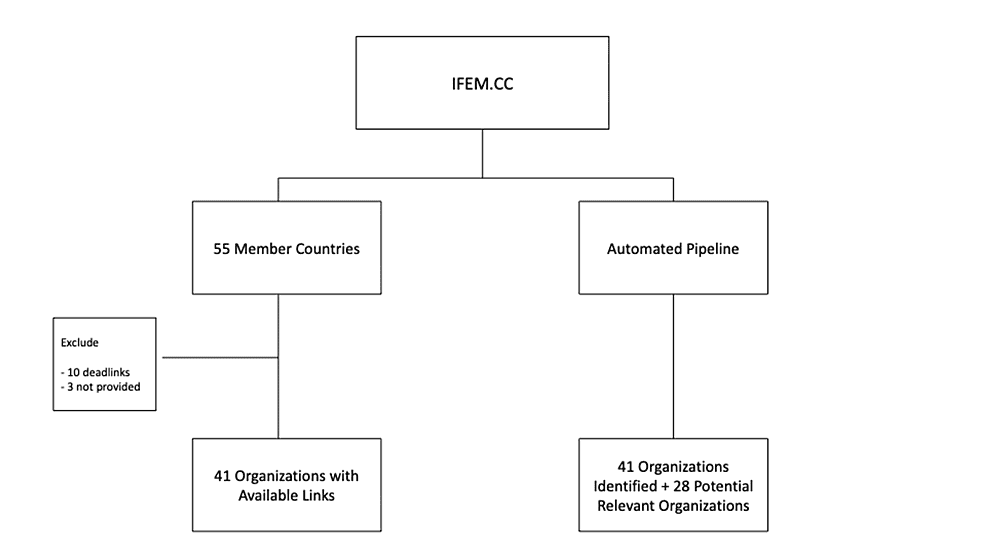
Figure 1: IFEM Member URL Analysis Flowchart
Table 1, derived from the automated pipeline, offers a comprehensive overview of IFEM member organizations' web presence across 55 countries. It includes various organizations such as Brazil's Associação Brasileira de Medicina de Emergência (https://abramede.com.br), the Canadian Association of Emergency Physicians (https://caep.ca), and the Taiwan Society of Emergency Medicine (https://www.sem.org.tw). The Danish Society for Emergency Medicine (https://dasem.dk/) and the Australian College for Emergency Medicine (https://acem.org.au) are also listed. The majority of URLs were operational, effectively linking to emergency medicine organizations across continents including North America, South America, Europe, Africa, Asia, and Australia. Conversely, nine countries had URLs listed as 'Deadlink', indicating that these links were non-functional at the time of data collection. These countries included Costa Rica, Dominican Republic, Georgia, Iceland, Iraq, Oman, Paraguay, Rwanda, and Sri Lanka. Additionally, Israel, Papua New Guinea, and Sudan were noted to have no URLs provided, highlighting gaps in the online representation within the IFEM network.
Organization Name | Country | URLs | Status |
Associação Brasileira de Medicina de Emergência | Brazil | https://abramede.com.br | URL Found |
Canadian Association of Emergency Physicians (CAEP) | Canada | https://caep.ca | URL Found |
Taiwan Society of Emergency Medicine | Taiwan | https://www.sem.org.tw | URL Found |
Korean Society of Emergency Medicine | South Korea | https://emergency.or.kr | URL Found |
Asociación Colombiana de Especialistas en Medicina de Urgencias y Emergencias (ACEM) | Colombia | https://www.acemcolombia.com | URL Found |
Emergency Medicine College of Thailand | Thailand | http://www.tceps.org | URL Found |
The Royal College of Emergency Medicine | United Kingdom | http://www.rcem.ac.uk | URL Found |
Belgian Society of Emergency and Disaster Medicine, Belgium | Belgium | https://www.besedim.be | URL Found |
Emirates Society of Emergency Medicine | United Arab Emirates | https://esem.ae | URL Found |
Sociedad Mexicana de Medicina de Emergencia | Mexico | https://smme-ac.com | URL Found |
Suomen Akuuttilääketieteen Yhdistys Ry | Finland | https://www.akuuttilaaketiede.fi | URL Found |
Saudi Society of Emergency Medicine | Saudi Arabia | https://sasem.org.sa | URL Found |
Philippine College of Emergency Medicine (PCEM) | Philippines | https://pcem.ph | URL Found |
Danish Society for Emergency Medicine | Denmark | http://www.dasem.dk | URL Found |
Iranian Society of Emergency Medicine | Iran | https://www.isem.ir | URL Found |
Sociedad Chilena de Medicina de Urgencia | Chile | http://www.sochimu.cl | URL Found |
Nepalese Society of Emergency Physicians | Nepal | https://www.nsep.org.np | URL Found |
Japanese Association for Acute Medicine | Japan | https://www.jaam.jp | URL Found |
Bahrain Medical Society | Bahrain | https://www.bhmedsoc.com | URL Found |
Norwegian Society for Emergency Medicine | Norway | https://www.norsem.org | URL Found |
Asociación Panameña de Medicina de Emergencias | Panama | https://www.aspame.org | URL Found |
Irish Association for Emergency Medicine | Ireland | https://iaem.ie | URL Found |
American College of Emergency Physicians | United States | https://www.acep.org | URL Found |
Vietnamese Society of Emergency Medicine | Vietnam | http://www.vsem.org.vn | URL Found |
De Nederlandse Vereniging van Spoedeisende Hulp Artsen (NVSHA) | Netherlands | https://www.nvsha.nl | URL Found |
Hong Kong College of Emergency Medicine | Hong Kong | https://hkcem.org.hk | URL Found |
Libyan Emergency Medicine Association | Libya | http://lema.org.ly | URL Found |
Trinidad and Tobago Emergency Medicine Association | Trinidad and Tobago | https://www.ttema.org | URL Found |
Türkiye Acil Tıp Derneği | Turkey | https://tatd.org.tr | URL Found |
Emergency Medicine Society of Ghana | Ghana | http://www.emsog.org | URL Found |
Emergency Medicine Society of South Africa | South Africa | https://emssa.org.za | URL Found |
Swedish Society for Emergency Care | Sweden | http://www.swesem.org | URL Found |
Polskie Towarzystwo Medycyny Ratunkowej | Poland | http://www.medycynaratunkowa.wroc.pl | URL Found |
Australasian College for Emergency Medicine (ACEM) | Australia | https://acem.org.au | URL Found |
Society for Emergency Medicine in Singapore (SEMS) | Singapore | https://semsonline.wpcomstaging.com | URL Found |
Emergency Medicine Association of Tanzania | Tanzania | http://www.emat.or.tz | URL Found |
Sociedad Argentina de Emergencias | Argentina | https://sae-emergencias.org.ar | URL Found |
Hungarian Society of Emergency Medicine | Hungary | http://msotke.hu | URL Found |
Society for Emergency Medicine India | India | https://www.semi.org.in | URL Found |
Pakistan Society of Emergency Medicine | Pakistan | http://www.psem.com.pk | URL Found |
Sociedad Peruana de Medicina de Emergencias y Desastres | Peru | https://www.spmed.org.pe/ | URL Found |
Asociación Costarricense de Medicos Emergenciólogos | Costa Rica | www.asocome.com | Deadlink |
Sociedad Dominicana de Emergenciologia | The Dominican Republic | www.sodoemcongreso.com | Deadlink |
Georgian Emergency Medicine Physicians Association | Georgia | https://www.gcep.org/ | Deadlink |
Georgian Emergency Medicine Physicians Association | Iceland | http://www.isem.is/ | Deadlink |
Iraqi Society for Emergency Medicine | Iraq | www.isemiraq.net | Deadlink |
Oman Society of Emergency Medicine | Oman | http://www.omanemergency.org | Deadlink |
Sociedad Paraguaya de Emergencias Medicas | Paraguay | http://www.spem.org.py/ | Deadlink |
Rwanda Emergency Care Association | Rwanda | http://www.recaonline.org/ | Deadlink |
Sri Lanka College of Emergency Physicians | Sri Lanka | http://www.slcep.lk/ | Deadlink |
Sri Lanka College of Emergency Physicians | Yemen | http://www.yaemd.org/ | Deadlink |
Israeli Association for Emergency Medicine | Israel | N/A | No URLs |
Papua New Guinea Society for Emergency Medicine | Papua New Guinea | N/A | No URLs |
Sudanese Emergency Physicians Association | Sudan | N/A | No URLs |
Table 1: List of EM Member Organizations Identified Through Manual Review and Automated Pipeline
Our analysis also revealed 28 additional URLs, potentially linked to emergency medicine organizations not listed on their member page, including entities like the American College of Osteopathic Emergency Physicians, Society for Academic Emergency Medicine, and the Swiss Society for Emergency and Rescue Medicine, with the latter providing content in German (Table 2). Notably, several entries such as the Royal College of Emergency Medicine in the United Kingdom and the European Society for Emergency Medicine have multiple URLs listed, indicating that the same organization might operate under various digital platforms or subdomains.
Organization Name | Country / Continent | URLs | Relevant | Comment |
African Federation for Emergency Medicine | Africa | https://afem.africa | Yes | - |
Society for Emergency Medicine India | India | https://emcon.page | Yes | same organization as SEMI |
The Red Flower Publication pvt. ltd., | N/A | https://www.rfppl.co.in | No | - |
European Geriatric Medicine Society | Europe | http://www.geriemeurope.eu | Yes | - |
Royal College of Emergency Medicine | United Kingdom | https://login.rcem.ac.uk | No | same organization as RCEM |
Society for Academic Emergency Medicine | United States | https://www.saem.org | Yes | - |
Centre for Excellence in Emergency Preparedness | Canada | https://www.ceep.ca | Yes | - |
N/A | N/A | https://translate.google.com | No | - |
German Society for Interdisciplinary Emergency and Acute Medicine | Germany | https://www.dgina.de | Yes | - |
Spanish Pediatric Emergency Research Group | Spain | https://sperg.es | Yes | - |
Emergency Medicine Foundation | Australia | https://emergencyfoundation.org.au | Yes | - |
Alfred Health | N/A | https://www.alfredhealth.org.au | No | - |
European Society for Emergency Medicine | Europe | http://www.eusem.org | Yes | same organization as EUSEM |
Società Italiana di Medicina di Emergenza e Urgenza Pediatrica | Italy | https://www.simeup.it | Yes | - |
Geriatric Emergency Department Collaborative | United States | https://gedcollaborative.com | Yes | - |
N/A | N/A | https://www.slepeweb.org | Yes | - |
Pediatric Emergency Medicine Collaborative Research Committee | United States | https://www.pemcollaborativeresearchcommitteepemcrc.org | Yes | - |
Royal College of Emergency Medicine | United Kingdom | https://www.rcemlearning.co.uk | Yes | same organization as RCEM |
American College of Osteopathic Emergency Physicians | United States | https://acoep.org | Yes | - |
Schweizerische Gesellschaft Für Notfall- und Rettungsmedizin Sgnor | Switzerland | https://www.sgnor.ch | Yes | - |
Australian and New Zealand College of Anaesthetists & Faculty of Pain Medicine | Australia and New Zealand | https://www.anzca.edu.au | No | - |
Pediatric Emergency Research Networks | Italy | https://pern-global.com | Yes | - |
International Federation for Emergency Medicine | N/A | https://ifem.nationbuilder.com | Yes | same organization as IFEM |
European Task Force for Geriatric Emergency Medicine | Europe | https://geriemeurope.eu | Yes | - |
European Society for Emergency Medicine | Europe | https://eusemcongress.org | Yes | same organization as EUSEM |
Asian Society for Emergency Medicine | Asia | https://www.asiansem.org | Yes | - |
American Academy of Emergency Medicine | United States | https://www.aaem.org | Yes | - |
International Emergency Medicine Education Project | N/A | https://iem-course.org | Yes | - |
Table 2: 28 Additional URLs identified by the Automated Method
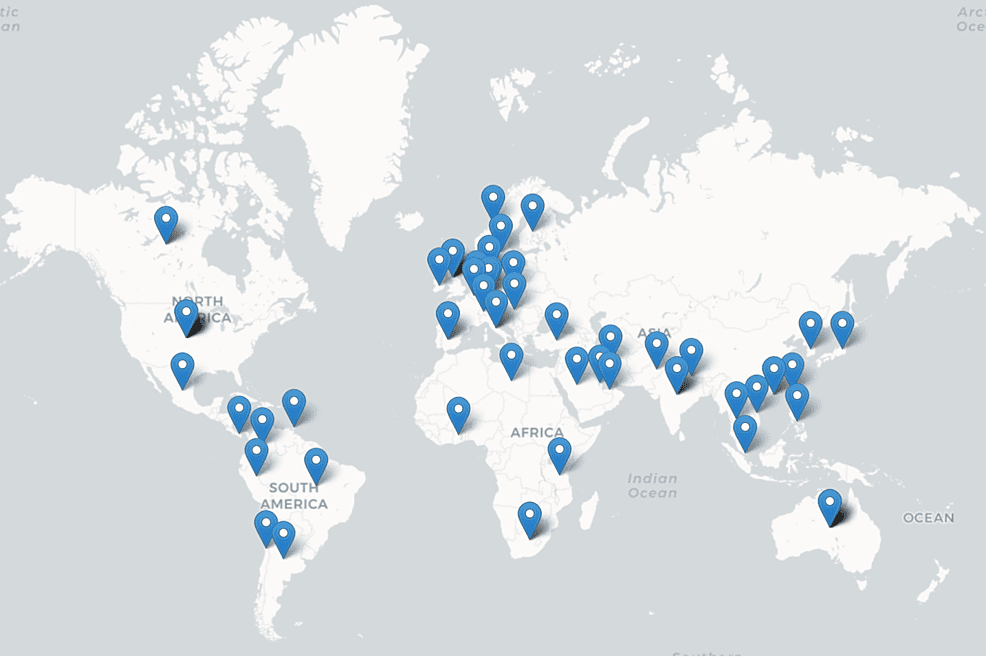
Figure 2: IFEM Global Network Visualization
Figure 2 illustrates the distribution of emergency medicine organizations connected to www.ifem.cc. Europe is represented by 14 countries, including the United Kingdom, Belgium, Finland, Denmark, Norway, Ireland, the Netherlands, Sweden, Poland, Hungary, Spain, Germany, Switzerland, and Italy. North America includes 5 countries: the United States, Canada, Mexico, Panama, and Trinidad and Tobago. In South America, there are organizations in 5 countries: Colombia, Peru, Brazil, Chile, and Argentina. Asia is represented by 16 countries: Japan, South Korea, Taiwan, Hong Kong, the Philippines, Vietnam, Thailand, Singapore, Nepal, India, Pakistan, Iran, Bahrain, the United Arab Emirates, Saudi Arabia, and Turkey. Africa's network includes organizations in 4 countries: Libya, Ghana, Tanzania, and South Africa. Oceania is represented by one country: Australia.
DISCUSSION
Network analysis is pivotal in deciphering complex interactions and enhancing operational efficiency within healthcare networks, particularly in emergency medicine. By studying the intricate web of digital communications and organizational ties, we can uncover critical insights into collaboration patterns and resource distribution. This analytical approach is essential for optimizing emergency responses and healthcare delivery. Network analysis in healthcare has been demonstrated to reveal hidden patterns and improve system management, as evidenced by studies in broader healthcare settings [3]Park J, Choi J, Choi JY: Network Analysis in Systems Epidemiology. J Prev Med Public Health. Jul. 2021, 54:259-564. 10.3961/jpmph.21.190. Our research builds on this foundation, applying these principles specifically to the digital ecosystem of emergency medicine organizations, thus providing a framework for understanding and enhancing global EM operations.
Our study highlights IFEM's significant influence in linking diverse emergency medicine organizations across the globe, which facilitates the exchange of knowledge, standards, and educational resources. This is crucial for promoting universal standards of care and fostering international cooperation in emergency medicine. Our study underscores IFEM’s effectiveness in enhancing online accessibility and navigability of emergency medicine resources, thereby strengthening global emergency care practices.
Our analysis of geographical distribution and network connectivity offers insights into the landscape of global emergency medicine organizations. Utilizing interactive mapping with the Folium library alongside the precise geolocation capabilities of the Geopy library, we visualized the extensive reach and interconnectedness of these organizations. The map delineates a notable concentration of emergency medicine in Europe and North America, indicative of well-established networks and advanced healthcare systems. Meanwhile, the significant presence in Asia and the Middle East points to burgeoning development within these regions' emergency medical services.
Conversely, the sparser distribution of markers in Africa may indicate regions with developing emergency medicine infrastructures or limited visibility in digital reporting. These findings underscore the persistent challenges of under-resourcing and disparities in the distribution of emergency care professionals, which continue to impede equitable health outcomes [10]Tiwari R, Naidoo R, English R, Chikte U: Estimating the emergency care workforce in South Africa. Afr J Prim Health Care Fam Med. Dec. 8:1-9. 10.4102/phcfm.v13i1.3174. Additionally, barriers such as infrastructure inadequacies, communication gaps, transportation issues, and cultural factors also likely hinder effective emergency care in these regions [11]Kironji AG, Hodkinson P, de Ramirez SS, et al.: Identifying barriers for out of hospital emergency care in low and low-middle income countries: a systematic review. BMC Health Serv Res. Apr. 19:291. 10.1186/s12913-018-3091-0. These disparities call for targeted interventions and strategic planning to enhance the visibility and capabilities of emergency medicine in underrepresented areas. IFEM and similar organizations could consider establishing digital infrastructure grants to support website development and hosting in underrepresented regions or implementing global outreach campaigns to identify and connect with active EM organizations lacking digital representation. These steps can collectively improve the inclusivity and resilience of the global emergency medicine network
LLMs have demonstrated significant potential in various aspects of global healthcare, including education [12]Benboujja F, Hartnick E, Zablah E, et al.: Overcoming language barriers in pediatric care: a multilingual, AI-driven curriculum for global healthcare education. Front Public Health. 2024, 12:1337395. 10.3389/fpubh.2024.1337395 and public health [14]De Angelis L, Baglivo F, Arzilli G, et al.: ChatGPT and the rise of large language models: the new AI-driven infodemic threat in public health. Front Public Health. 2023, 11:1166120. 10.3389/fpubh.2023.1166120 . The integration of LLM for analyzing multilingual content substantially enhances global emergency medicine network analysis by facilitating the processing and understanding of diverse geographical data. This capability is especially valuable in our study, where understanding the nuances of regional dynamics is essential for effective international collaboration in emergency medicine. LLMs not only translate but also provide contextual understanding of non-English sources, thus mitigating biases towards predominantly English-language digital sources and leading to a more balanced and comprehensive global network mapping.
While this automated methodology and these results provide crucial insights, they also have several limitations that should be considered. Firstly, IFEM only allows one national society organization to join, which could limit the search for EM organizations within the same country. Although this policy streamlines global representation, it may inadvertently restrict the visibility of additional emergency medicine organizations within the same country. As a result, valuable connections and potential collaborations might be overlooked, limiting the comprehensiveness of the global emergency medicine network.
The analysis also revealed non-functional URLs and missing links, reflecting broader issues related to digital infrastructure and membership policies. Missing or outdated links may hinder access to critical resources and limit communication essential for international collaboration. For example, the absence of a URL for Israel’s robust emergency medicine organization (https://emergencymed.org.il/) suggests gaps in IFEM’s database. These omissions represent a flaw in IFEM’s listings and demonstrate a limitation in our study, potentially skewing perceptions of global emergency medicine networks. Addressing these inconsistencies is important for achieving accurate network representation and strengthening IFEM’s role as a global hub for emergency medicine organizations.
Additionally, the identification of 28 additional URLs not listed on the IFEM member page highlights a broader digital space that extends beyond IFEM's structure. Although these organizations are not official members, they engage in important research, education, and advocacy in emergency medicine. Their inclusion in the network underscores the richness and complexity of global emergency medicine collaborations and emphasizes the need for broader mapping efforts that extend beyond formal affiliations. Recognizing these organizations enables a more accurate representation of the global EM landscape and supports the case for expanding digital inclusivity within federated models like IFEM.
Furthermore, the reliance on digital sources and web-based data might omit important emergency medicine organizations that have a limited online presence, particularly in regions where digital engagement is lower. This could potentially bias our understanding of global networks towards more digitally active organizations.
Finally, while Gemini 1.0 Pro provided robust multilingual analysis, potential biases in context-specific interpretation may remain. The use of automated tools for data collection and analysis, while efficient, may overlook nuances in data that require human interpretation, such as the quality of inter-organizational relationships or the actual impact of these collaborations on emergency care outcomes.
CONCLUSION
In conclusion, our study underscores the effectiveness of network analysis in detailing the global reach of emergency medicine organizations, particularly emphasizing IFEM's role in improving accessibility and collaboration. We revealed global disparities in emergency medicine distribution and proposed deeper investigations into digital interconnectivity to better understand regional impacts. This research paves the way for broader applications of network analysis in healthcare, potentially enhancing digital global collaboration.
Declarations
Ethics approval and consent to participate
Not applicable. This article analyzed public organizational webpages and did not involve direct human-participant research or identifiable patient data.
Consent for publication
Not applicable.
Availability of data and materials
The network and webpage data sources used in this article are described in the manuscript. Additional materials are available from the corresponding author on reasonable request.
Competing interests
The authors declare no commercial or financial conflict of interest.
Funding
No funding was received for this research.
Editorial board statement
One or more authors were editorial board members at the time of submission; independent editorial handling should be documented.
Authors' contributions
Norawit Kijpaisalratana: Writing - original draft; Writing - review and editing; Conceptualization; Methodology; Formal analysis | Abdel badih El Ariss: Writing - original draft; Writing - review and editing; Conceptualization; Formal analysis | Jeffrey Yuan: Writing - review and editing; Formal analysis; Project administration; Data curation | Kevin Shannon: Writing - review and editing; Project administration; Data curation; Conceptualization | David Chen: Writing - review and editing | Rmaah Memon: Writing - review and editing; Supervision; Conceptualization | Prem Menon: Writing - review and editing; Conceptualization; Methodology | Nicole Danaher-Garcia: Writing - review and editing | Sean Kivlehan: Writing - review and editing; Supervision
References
- Brunson JC, Laubenbacher RC: Applications of network analysis to routinely collected health care data: a systematic review. Journal of the American Medical Informatics Association. 2017, 25:210-221. 10.1093/jamia/ocx052
- Luke DA, Harris JK: Network analysis in public health: history, methods, and applications. Annu Rev Public Health. 2007, 28:69-93. 10.1146/annurev.publhealth.28.021406.144132
- Park J, Choi J, Choi JY: Network Analysis in Systems Epidemiology. J Prev Med Public Health. Jul. 2021, 54:259-564. 10.3961/jpmph.21.190
- Hevey D: Network analysis: a brief overview and tutorial. Health Psychol Behav Med. Sep. 25:301-328. 10.1080/21642850.2018.1521283
- Niyirora J, Aragones O: Network analysis of medical care services. Health Informatics J. Sep. 2020, 26:1631-1658. 10.1177/1460458219887047
- He S, Chen D, Black KC, et al.: Network Analysis of Academic Medical Center Websites in the United States. Scientific Data. 202304282023, 10:245. 10.1038/s41597-023-02104-3
- Yao R, Zhang W, Evans R, et al.: Inequities in health care services caused by the adoption of digital health technologies: scoping review. J Med Internet Res. 2022 Mar;24(3):e34144. 10.2196/34144.
- Monlezun DJ, Omutoko L, Oduor P, et al. Digitalization of health care in low- and middle-income countries. Bull World Health Organ. 2025 Feb 1;103(2):148-154. 10.2471/BLT.24.291643.
- Gomez-Cabello CA, Borna S, Pressman SM, et al.: Large language models for intraoperative decision support in plastic surgery: a comparison between ChatGPT-4 and Gemini. Medicina. 2024;60(6):957. 10.3390/medicina60060957.
- Tiwari R, Naidoo R, English R, Chikte U: Estimating the emergency care workforce in South Africa. Afr J Prim Health Care Fam Med. Dec. 8:1-9. 10.4102/phcfm.v13i1.3174
- Kironji AG, Hodkinson P, de Ramirez SS, et al.: Identifying barriers for out of hospital emergency care in low and low-middle income countries: a systematic review. BMC Health Serv Res. Apr. 19:291. 10.1186/s12913-018-3091-0
- Benboujja F, Hartnick E, Zablah E, et al.: Overcoming language barriers in pediatric care: a multilingual, AI-driven curriculum for global healthcare education. Front Public Health. 2024, 12:1337395. 10.3389/fpubh.2024.1337395
- Safranek CW, Sidamon-Eristoff AE, Gilson A, Chartash D: The Role of Large Language Models in Medical Education: Applications and Implications. JMIR Med Educ. Aug. 14:50945. 10.2196/50945
- De Angelis L, Baglivo F, Arzilli G, et al.: ChatGPT and the rise of large language models: the new AI-driven infodemic threat in public health. Front Public Health. 2023, 11:1166120. 10.3389/fpubh.2023.1166120
- Meskó B: The Impact of Multimodal Large Language Models on Health Care's Future. J Med Internet Res. Nov. 2:52865. 10.2196/52865
- Parray AA, Inam ZM, Ramonfaur D, Haider SS, Mistry SK, Pandya AK: ChatGPT and global public health: Applications, challenges, ethical considerations and mitigation strategies. Global Transitions. 202301012023, 5:50-54.