


ABSTRACT
Background: Emergency departments (EDs) in low- and middle-income countries (LMICs) frequently face severe resource constraints and operational inefficiencies, including staffing shortages, overcrowding, and security risks. These challenges disrupt workflow, delay care delivery, and increase patient morbidity. Traditional quality improvement frameworks, such as Lean Six Sigma, do not fully accommodate the constraints of resource-limited settings.
Methods: The Emergency and Trauma Excellence (EmTEx) framework was developed as a scalable, human-centered clinical audit tool incorporating Continuous Quality Improvement (CQI) principles for emergency care delivery. A structured clinical audit was conducted at Evercare Hospital Lahore (EHL) in November 2024, followed by a re-audit in January 2025, to evaluate triage efficiency, patient flow, staffing, security, and infection control. The assessment involved checklist-based evaluations to identify workflow bottlenecks, structured staff interviews to capture frontline challenges, and facility walkthroughs to assess resource limitations, ensuring real-time monitoring and sustained operational improvements.
Results: The initial audit identified delayed triage workflows (avg. 15–20 min per patient), inadequate resuscitation spaces, and insufficient peak-hour staffing, contributing to operational inefficiencies. The re-audit showed a 22% reduction in triage time and a 30% decrease in security incidents following standardized Emergency Severity Index (ESI 4.0) protocols, additional staffing, and enhanced safety measures. These improvements reflect a CQI-driven approach that prioritizes workflow optimization, real-time tracking, and patient-centered interventions, forming the foundation for broader scalability and sustainability across LMIC EDs.
Conclusion: EmTEx provides a scalable clinical audit framework for LMIC EDs, integrating CQI tracking and iterative validation cycles. Findings from Evercare Lahore’s ED highlight broadly applicable insights for improving triage, staffing, and patient safety, with planned audits in Nigeria and Kenya for further validation.
Keywords: Clinical Audit, Emergency Medicine, Health Systems Innovation, Human-Centered Design, LMICs, Continuous Quality Improvement (CQI).
BACKGROUND
Emergency departments (EDs) in low- and middle-income countries (LMICs), which form a significant portion of what are often termed Emerging Markets, serve as critical access points for acute medical care. However, they face persistent operational inefficiencies, resource constraints, workforce shortages, and security risks, all of which contribute to delayed patient care, increased morbidity, and provider burnout [1]Chang CY, Abujaber S, Reynolds TA, Camargo CA Jr, Obermeyer Z. Burden of emergency conditions and emergency care utilization: new estimates from 40 countries. Emerg Med J. 2016;33(11):794-800., [2]Kruk ME, Gage AD, Arsenault C, et al. High-quality health systems in the Sustainable Development Goals era: time for a revolution. Lancet Glob Health. 2018;6(11):e1196-e1252.. Despite the growing burden of emergency conditions, many LMIC healthcare systems lack standardized triage protocols, adequate resuscitation resources, and sustainable quality improvement mechanisms to ensure efficient patient flow and timely interventions [3]Obermeyer Z, Abujaber S, Makar M, et al. Emergency care in 59 low- and middle-income countries: a systematic review. Bull World Health Organ. 2015;93(8):577-586G.. Studies examining pediatric emergency care in LMIC settings have similarly highlighted critical deficiencies in the general ED infrastructure, staff training, and process standardization, reinforcing the need for structured, context-appropriate interventions [4]Bhimani S, Brown N, Mian AI. Streamlining Pediatric Emergency Medicine at a Tertiary-care Hospital of a Low- to Middle-income Country. Indian Pediatr. 2015;52:1021-1024. Available at: https://indianpediatrics.net/dec2015/dec-1021-1024.htm.
Traditional quality improvement frameworks, such as Lean Six Sigma, have been implemented in healthcare settings to improve efficiency and reduce waste [5]McDermott O, Antony J, Bhat S, Jayaraman R, Rosa A, Marolla G, Parida R. Lean Six Sigma in Healthcare: A Systematic Literature Review on Motivations and Benefits. Processes. 2022;10(10):1910. doi:10.3390/pr10101910., [6]Antony J, Palsuk P, Gupta S, Mishra D, Barach P. Six Sigma in healthcare: A systematic review of the literature. Int J Qual Reliab Manag. 2018;35(5):1075-1092. doi:10.1108/IJQRM-02-2017-0027.. However, there is limited research on its implementation in resource-constrained EDs, where the dynamic nature of patient flow and critical care needs may pose unique challenges. This underscores the need for a context-specific, scalable framework that addresses both operational efficiency and equity in emergency care delivery.
To bridge this gap, the Emergency and Trauma Excellence (EmTEx) framework was developed as a clinical audit innovation. It is a structured, human-centered methodology designed to systematically assess and improve ED operations in resource-limited environments. Unlike conventional clinical audits, which primarily focus on compliance monitoring, EmTEx integrates iterative validation cycles, real-time performance tracking, and frontline-driven process improvements. Through checklist-based evaluations, structured staff interviews, and facility walkthroughs, EmTEx systematically identifies workflow inefficiencies, triage inconsistencies, and security vulnerabilities, ensuring data-driven quality enhancement rather than static compliance reporting.
Early implementations of EmTEx audits across multiple EDs in Pakistan have identified recurring operational challenges, including triage bottlenecks, inconsistent implementation of the Emergency Severity Index (ESI 4.0) [7]Gilboy N, Tanabe T, Travers D, Rosenau AM. Emergency Severity Index (ESI): A Triage Tool for Emergency Department Care, Version 4. Implementation Handbook 2012 Edition. AHRQ Publication No. 12-0014. Agency for Healthcare Research and Quality; 2011. or other triage systems, resuscitation inadequacies, and deficiencies in staffing levels and security measures. Prior internal assessments at Mukhtar A. Sheikh Hospital in Multan, Pakistan, and Altamash General Hospital in Karachi, Pakistan, revealed similar gaps, reinforcing the need for a structured clinical audit framework tailored for LMIC emergency settings in general. These findings highlight systemic gaps in emergency care delivery that require structured, human-centered interventions to standardize triage accuracy, optimize patient flow, and enhance ED safety (EmTEx audit reports, MASH 2020 and AGH 2023, unpublished).
EmTEx was developed by Innovly, an innovation management startup specializing in structured frameworks to enhance healthcare efficiency through innovation [8]Innovly. About Us. 2025. Available at: https://innovly.net/.
This study presents findings from a clinical audit conducted at Evercare Hospital Lahore in November 2024, followed by a re-audit in January 2025 to evaluate the impact of implemented interventions. The assessment examined triage accuracy, resuscitation preparedness, staff sufficiency, patient flow efficiency, and security enhancements. The results provide insights into the effectiveness of EmTEx as a scalable framework for quality improvement, with planned audits in Nigeria and Kenya to further validate its applicability across diverse LMIC settings.
METHODS
Audit Design and Setting
The audit was conducted at Evercare Hospital Lahore (EHL), a multi-disciplinary tertiary-care hospital in Pakistan and a flagship site within the Evercare Group, a global healthcare network operating across South Asia and Africa [9]Evercare Hospital Lahore. About Us. 2025. Available at: https://www.evercarehospitallahore.com/, [10]Evercare Group. About Evercare. 2025. Available at: https://evercaregroup.com/. Evercare’s presence in these regions aligns with broader trends in Emerging Markets, where healthcare investments aim to bridge quality gaps in LMIC settings.
The selection of EHL for this audit was strategic, considering its high patient volume, role in private-sector emergency care, and commitment to integrating international best practices in emergency medicine. The clinical audit was conducted in person over a single day by the senior author (A.M.), a professor of Emergency Medicine with expertise in Human-Centered Design Thinking (HCDT) for healthcare settings.
Following the initial assessment in November 2024, a re-audit in January 2025 was conducted to evaluate the impact of implemented interventions. A convenience-based approach was used for interviews, including all ED personnel on duty during the audit or re-audit period. This ensured participation from a multi-disciplinary ED team, including ED doctors, nurses, paramedics, ED coordinators, and security personnel. Insights gathered from these frontline staff were later validated through discussions with ED Team Leads and the Hospital-wide Senior Leadership Team, ensuring a comprehensive and multi-tiered perspective on operational challenges and improvements.
EmTEx Methodology
EmTEx as described in the background section, was developed by Innovly, an innovation-focused startup, and has been previously validated in other settings. No financial transactions were involved in its application for this study. The EmTEx framework is designed to enhance emergency care processes through structured evaluations, iterative validation, and frontline-driven quality improvements. It integrates HCDT principles and continuous quality improvement (CQI) methodologies to identify operational inefficiencies and implement scalable solutions in LMIC emergency settings.
EmTEx is inspired by international patient safety and quality standards, including the Joint Commission International (JCI) accreditation framework [11]Joint Commission International. Joint Commission International Accreditation Standards for Hospitals, 8th Edition. Oakbrook Terrace, IL: Joint Commission Resources; 2024.. While JCI frameworks provide hospital-wide accreditation standards, their application in resource-limited emergency care settings is often constrained by financial and operational barriers. EmTEx builds upon key JCI principles, such as patient safety, clinical efficiency, and quality benchmarking, but differs by being an ED-specific methodology focused on continuous frontline-driven quality improvement rather than accreditation compliance. By integrating real-time process evaluations and iterative validation cycles, EmTEx provides a structured yet adaptable alternative to traditional hospital-wide quality management systems.
The checklist-based methodology employed in this study builds upon validated clinical audit tools used in previous assessments of EDs which demonstrated the effectiveness of structured, JCI-aligned evaluations in identifying workflow inefficiencies and triage gaps. The methodology employs structured audits using checklist-based evaluations, staff interviews, and workflow observations to identify triage inefficiencies, patient flow bottlenecks, security gaps, and resuscitation preparedness. This approach allows for real-time adaptation and scalability across diverse ED settings.
Audit Parameters and Data Collection
The EmTEx audit framework assessed seven key ED performance domains, ensuring a comprehensive evaluation of emergency care operations:
- ED Layout and Infrastructure: Examined physical space allocation, including triage areas, resuscitation zones, and waiting areas, to optimize patient flow and reduce congestion.
- Staffing and Shift Management: Assessed nurse-to-patient and physician-to-patient ratios, peak-hour sufficiency, shift coordination, and workload distribution to ensure adequate staffing across all operational hours.
- Equipment and Facilities: Evaluated the availability and accessibility of point-of-care diagnostics, portable imaging devices, and other critical emergency equipment needed for resuscitation and acute care interventions.
- Security and Violence Management: Assessed the presence of security personnel, crowd control protocols, and staff safety measures in high-risk emergency settings, including the frequency of workplace aggression incidents.
- Triage and Patient Flow: Measured compliance with ESI 4.0 or equivalent triage protocols, time-to-triage, and workflow efficiency using time-motion studies and patient throughput tracking.
- Staff Training and Competencies: Reviewed Life Support certification rates (BLS, ACLS, PALS, NRP) and the frequency of structured training programs for ED personnel.
- Process Improvement and Quality Control: Examined the implementation of CQI mechanisms, KPI tracking, and structured feedback loops to ensure sustained performance enhancement.
The audit lasted one full day, involving direct observations, structured interviews with ED personnel, and checklist-based evaluations. Findings from the November 2024 baseline audit were compared with those from the January 2025 re-audit to assess the effectiveness of interventions.
Data Analysis
Quantitative data, including compliance rates and time-based workflow metrics, were obtained directly from Evercare Lahore's IT/technology specialists, electronic health records (EHR) personnel, and patient safety teams. These teams provided the relevant performance indicators, including patient flow times, triage categorization accuracy, and resource availability. Since the audit was based on hospital-reported performance indicators rather than independent data collection, the analysis focused on trend identification through comparative assessment of compliance rates, workflow metrics, and qualitative insights from structured staff interviews.
Ethical Approval
This audit was conducted as part of a quality improvement initiative aimed at enhancing emergency care processes at Evercare Hospital Lahore. The hospital leadership reviewed and approved the audit approach in alignment with institutional quality and patient safety objectives. Given that this study involved retrospective analysis of operational metrics without direct patient data collection, it did not require formal institutional review board (IRB) approval. The audit adhered to ethical standards for healthcare quality improvement research, ensuring confidentiality, transparency, and minimal disruption to clinical operations.
RESULTS
Findings from the first clinical audit (November 2024) at Evercare Hospital Lahore (EHL) also established a baseline. Summarized in Table 1, it identified systemic inefficiencies across seven key domains, including ED layout and infrastructure, staffing and shift management, equipment and facilities, security and violence management, triage and patient flow, staff training and competencies, and process improvement and quality control.
The findings highlighted operational challenges, including delays in triage, inconsistent adherence to Emergency Severity Index (ESI 4.0) protocols, shortages in peak-hour staffing, inadequate resuscitation preparedness, and gaps in security measures. A structured re-audit conducted in January 2025 assessed the impact of targeted interventions. The results demonstrated measurable improvements in several domains, reinforcing the effectiveness of the EmTEx framework in enhancing ED operations while also identifying areas requiring further intervention.
Table 1: Key Findings from the First Clinical Audit (November 2024).
Audit Parameter |
Key Element |
Status |
Observations |
Recommendations |
|---|---|---|---|---|
ED Layout and Infrastructure |
Daily volumes |
160-190/day |
Average shift: 60-70 patients; peak times vary |
Optimize patient flow management during peak hours |
ED Layout and Infrastructure |
Resuscitation space allocation |
Limited |
Clear demarcation between adult and pediatric resuscitation spaces will be updated |
Define and optimize resuscitation zones |
Staffing and Shift Management |
Staff availability (shift-wise) |
Inconsistent |
Varies by shift; needs coordinator for peak hours |
Implement shift coordinators for better oversight |
Equipment and Facilities |
Equipment (POCT, portable devices) |
Limited |
Additional portable X-ray and echo needed |
Invest in portable diagnostic tools and clear demarcation |
Security and Violence Management |
Security and crowd control |
Insufficient |
One guard only; substantial risk during aggressive incidents; 'zero tolerance' signage lacking |
Deploy additional security guards and zero-tolerance signage |
Triage and Patient Flow |
Triage clarity and protocols |
Lacking |
ESI 4.0 sign needs specification; Urdu translation needed |
Clarify ESI protocols and add Urdu translations |
Triage and Patient Flow |
ED acuity: LOS, TAT, etc. |
Moderate |
High-acuity cases reported daily, requiring resus beds. LOS and TAT highly variable |
Standardize acuity assessment processes for consistency |
Staff Training and Competencies |
BLS, ACLS, PALS, NRP, etc. |
Inadequate |
Advance life support certifications lacking for most staff; training required |
Implement mandatory ACLS/BLS/PALS training programs |
Process Improvement and Quality Control |
Infection control Measures |
Partially Met |
Isolation room present but distant |
Relocate isolation room closer to critical areas |
Process Improvement and Quality Control |
CQI processes |
Absent |
CQI committee and KPI tracking required |
Establish CQI subcommittee and regular KPI tracking |
Abbreviations used in Table 1. ACLS: Advanced Cardiovascular Life Support; BLS: Basic Life Support; CQI: Continuous Quality Improvement; ED: Emergency Department; ESI: Emergency Severity Index; KPI: Key Performance Indicator; LOS: Length of Stay; NRP: Neonatal Resuscitation Program; PALS: Pediatric Advanced Life Support; POCT: Point-of-Care Testing; TAT: Turnaround Time.
Triage Accuracy and Efficiency
The first clinical audit (November 2024) revealed inefficiencies in triage workflows, including delays in manual registration and inconsistent application of ESI 4.0 due to unclear signage and lack of Urdu translations, which led to misclassification of patient acuity levels. The January 2025 re-audit showed improved compliance with ESI 4.0 following structured triage training and signage standardization.
Although triage times showed partial improvement, delays persisted due to continued reliance on manual processes, as digital triage integration remained unimplemented. The proportion of patients triaged within the recommended time frame increased, but full standardization has yet to be achieved.
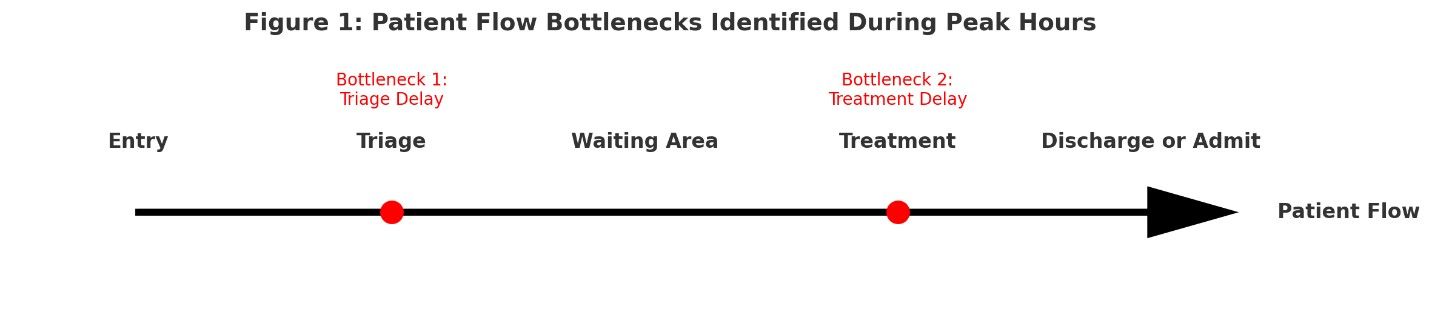
Figure 1: Primary patient flow bottlenecks identified during peak hours in the first clinical audit (November 2024), which contributed to extended triage wait times and delayed patient assessments.
Resuscitation Preparedness and Infection Control
The availability of resuscitation spaces was limited in the November 2024 audit, with only four beds allocated for high-acuity patients, leading to capacity constraints. Equipment shortages and delays in access to point-of-care diagnostics further hindered resuscitation efficiency. Additionally, infection control measures were partially met, with the isolation room positioned far from the main ED area, impacting the timely management of infectious cases.
As shown in Table 2, the January 2025 re-audit demonstrated incremental improvements, including better stocking of resuscitation stations, relocation of portable imaging devices, and repositioning of the isolation zone closer to critical care areas. These changes improved compliance with infection control protocols, although further refinements are needed to ensure sustained implementation.
Table 2: Re-Audit Findings Following Targeted Interventions (January 2025).
Audit Parameter |
Key Element |
Status |
Observations |
Quarterly Update Metrics |
|---|---|---|---|---|
ED Layout and Infrastructure |
Daily volumes |
Updated: 100-150/day |
Average shift: 40-60 patients; peak times vary between 2 PM to 11 PM |
Patient flow dashboards: Average daily volume, peak hour trends |
ED Layout and Infrastructure |
Resuscitation space allocation |
In progress |
Space constraints hinder clear adult vs. pediatric resuscitation separation |
Successful resuscitations per AHA guidelines; Time-to-Resus Readiness tracking |
Staffing and Shift Management |
Staff availability (shift-wise) |
Improved |
Additional staff hired, especially for peak hours, but flexibility issues remain |
Staffing adequacy per shift: Percentage coverage for peak hours |
Equipment and Facilities |
Equipment (POCT, portable devices) |
Adequate |
IDC response is prompt, making additional portable X-ray and echo unnecessary |
Equipment functionality audit: Timely IDC response rates |
Security and Violence Management |
Security and crowd control |
Improved |
Additional security guards deployed; zero-tolerance signage now present |
Incident reporting: Number of aggression incidents and security response times |
Triage and Patient Flow |
Triage clarity and protocols |
Partially Resolved |
Improved signage with ESI 4.0 protocols albeit lacking in Urdu. Manual systems still delay registration workflows |
Triage efficiency: Percentage of patients triaged within 10 minutes. Improved bilingual signage for triage |
Triage and Patient Flow |
ED acuity: LOS, TAT, etc. |
Moderate |
High-acuity cases reported daily, requiring resuscitation beds. LOS and TAT still variable |
LOS and TAT metrics: Median times per acuity level |
Staff Training and Competencies |
BLS, ACLS, PALS, NRP, etc. |
In Progress |
Most staff still requiring certifications. Advanced life support training is being outsourced through a non-AHA process |
Certification completion rates: Percentage of staff trained quarterly |
Process Improvement and Quality Control |
Infection control measures |
Partially Met |
Isolation room not relocated due to space limitations; infection control protocols still need improvement |
Bi-weekly infection audits: Compliance rates with updated protocols |
Process Improvement and Quality Control |
CQI processes |
Established |
CQI committee formed (ad hoc) and aligned for sustained progress and outcomes |
KPI reviews: Quarterly performance and compliance reports |
Abbreviation used in Table 2. ACLS: Advanced Cardiovascular Life Support; AHA: American Heart Association; BLS: Basic Life Support; CQI: Continuous Quality Improvement; ED: Emergency Department; ESI: Emergency Severity Index; IDC: Islamabad Diagnostic Center; KPI: Key Performance Indicator; LOS: Length of Stay; NRP: Neonatal Resuscitation Program; PALS: Pediatric Advanced Life Support; POCT: Point-of-Care Testing; TAT: Turnaround Time.
Staffing Sufficiency and Shift Management
Staffing inefficiencies were a major challenge in the November 2024 audit, particularly during peak hours when nurse-to-patient and physician-to-patient ratios fell below recommended levels. The audit identified a lack of flexibility in shift schedules, leading to uneven workload distribution. While overnight shifts had relatively higher staffing levels, peak-hour shortages contributed to delays in care delivery.
Following the findings from the first audit (November 2024), which highlighted peak-hour staffing shortages, the January 2025 re-audit demonstrated improved shift coordination with additional staff allocations during peak hours. However, most staff still required advanced life support certifications, including ACLS, BLS, and PALS, which remained in progress at the time of reassessment. Although incremental gains were made in workload distribution, further capacity-building efforts will be necessary to ensure sustainable workforce improvements (see Table 2).
Patient Flow Efficiency and Bottleneck Reduction
As indicated in Figure 1, the November 2024 audit identified major bottlenecks in triage and treatment delays, contributing to longer ED stays and crowding. Time-to-initial-assessment was prolonged due to manual triage workflows, while prolonged discharge procedures resulted in inefficient patient throughput.
As shown in Table 2, the January 2025 re-audit demonstrated a reduction in wait times following enhanced staff coordination, although workflow inefficiencies persisted due to the absence of digital triage systems. The integration of tablet-based triage and electronic health records (EHR) remains a pending recommendation, and its implementation is expected to significantly improve patient flow efficiency in future audits.
Security and Workplace Safety
Security concerns were a major issue in the November 2024 audit, with reports of 2–3 workplace aggression incidents per week and only one security guard per shift. The lack of structured de-escalation training further exacerbated the issue, leaving staff vulnerable to patient and visitor aggression.
By the January 2025 re-audit, additional security staff had been deployed, leading to a measurable reduction in recorded security incidents. Incident reporting was also reinforced, allowing for better documentation of workplace aggression and staff feedback. As part of structured qualitative interviews conducted during the January re-audit, emergency physicians and registered nurses (RNs) expressed strong appreciation for the enhancement in their protection following the deployment of additional security guards, including female security personnel. The presence of female security staff was specifically noted as a positive step in handling sensitive or high-risk situations involving female patients and visitors.
While security presence improved, formal de-escalation training for staff remained unimplemented, highlighting a gap that requires further attention in future interventions (see Table 2).
Scalability of EmTEx and Projected Outcomes
The audit results underscore the scalability of EmTEx-driven interventions in LMIC EDs, with tangible improvements in staffing, infection control, security measures, and resuscitation preparedness. However, certain operational challenges persist, particularly in triage workflow digitization, long-term staffing sustainability, and security training implementation. As shown in Table 2, the introduction of CQI tracking enabled adaptive modifications, reinforcing the value of real-time monitoring rather than one-time interventions.
If further refinements are made, projected outcomes include a 20–30% reduction in patient wait times, sustained improvements in triage accuracy and patient flow efficiency, and enhanced staff safety and engagement. Future audits in Nigeria and Kenya will evaluate whether these improvements can be replicated across diverse LMIC settings, further validating the scalability of the EmTEx framework.
DISCUSSION
Structured clinical audits serve as essential tools for identifying systemic inefficiencies in emergency care settings, particularly in resource-limited environments. The EmTEx framework, developed to integrate human-centered design with CQI, demonstrated its potential to drive measurable improvements in triage efficiency, staffing sufficiency, and security infrastructure within the Evercare Lahore ED. The January 2025 re-audit confirmed these enhancements, including a 22% reduction in triage time and a 30% decrease in security incidents, underscoring the role of iterative quality assessments in LMIC emergency care settings. Prior audits at MASH and AGH also demonstrated measurable improvements following structured clinical audits, reinforcing the scalability and impact of EmTEx-driven interventions.
These findings align with prior research demonstrating that structured quality improvement interventions, such as Lean Six Sigma, have been used to enhance healthcare processes [5]McDermott O, Antony J, Bhat S, Jayaraman R, Rosa A, Marolla G, Parida R. Lean Six Sigma in Healthcare: A Systematic Literature Review on Motivations and Benefits. Processes. 2022;10(10):1910. doi:10.3390/pr10101910., [6]Antony J, Palsuk P, Gupta S, Mishra D, Barach P. Six Sigma in healthcare: A systematic review of the literature. Int J Qual Reliab Manag. 2018;35(5):1075-1092. doi:10.1108/IJQRM-02-2017-0027.. However, as alluded to before, such models are often resource-intensive and not always adaptable to LMIC emergency care settings.
By embedding CQI cycles into emergency care workflows, EmTEx ensures that quality enhancements are not static, one-time interventions but rather adaptive, frontline-driven processes. This iterative approach allows for the continuous refinement of triage efficiency, resuscitation preparedness, and staff coordination, promoting a sustainable quality culture within LMIC EDs. The integration of real-time audit feedback further differentiates EmTEx from traditional compliance-based frameworks, reinforcing its role as a dynamic quality improvement tool rather than a retrospective assessment mechanism.
A study on emergency care optimization in South India found that applying Donabedian’s quality model to ED workflows led to significant reductions in patient wait times and improved efficiency, supporting the structured quality improvement approach adopted in EmTEx [12]Goenka A, Mundkur S, Nayak SS, et al. Improving the emergency services using quality improvement project and Donabedian model in a quaternary teaching hospital in South India. BMJ Open Qual. 2024;13(1):e002246. doi:10.1136/bmjoq-2022-002246..
Triage inefficiencies remain a global challenge in LMIC emergency care. The WHO bulletin on triage in low-resource settings emphasizes that CQI-based triage enhancements, including ESI standardization, bilingual signage, and real-time monitoring, significantly improve patient flow [13]World Health Organization. Triage systems in low-resource emergency care settings. Bull World Health Organ. 2023. Available at: https://cdn.who.int/media/docs/default-source/bulletin/online-first/blt.23.290863.pdf. Our findings confirm these observations, with structured training on ESI 4.0 and signage standardization leading to improved triage compliance. However, the continued reliance on manual registration processes hindered full optimization, reflecting ongoing digital integration challenges.
Infection control remains a critical challenge in LMIC EDs, where spatial constraints and resource limitations hinder effective isolation practices. The WHO Infection Prevention and Control (IPC) guidelines emphasize that timely patient isolation and adherence to standardized infection control protocols can significantly reduce nosocomial transmission risks [14]World Health Organization. Guidelines on Core Components of Infection Prevention and Control Programmes at the National and Acute Health Care Facility Level. World Health Organization. 2016. Available at: https://www.who.int/publications/i/item/9789241549929. The EmTEx audit findings, particularly the repositioning of the isolation room and reinforcement of infection control measures, align with these global recommendations, reinforcing the need for continued adherence to evidence-based IPC strategies in emergency care settings.
Security concerns were a major operational risk, with aggressive incidents occurring 2–3 times per week before additional security personnel were deployed. The literature on hospital security protocols suggests that multi-tiered security approaches, including personnel reinforcement and structured de-escalation training, significantly reduce workplace violence [15]Gillespie GL, Gates DM, Miller M, Howard PK. Emergency department workers' perceptions of security officers' effectiveness during violent events. Work. 2012;42(1):21-27. doi:10.3233/WOR-2012-1327. PMID: 22635146; PMCID: PMC8882054., [16]Baig LA, Tanzil S, Shaikh S, Hashmi I, Khan MA, Polkowski M. Effectiveness of training on de-escalation of violence and management of aggressive behavior faced by health care providers in a public sector hospital of Karachi. Pak J Med Sci. 2018;34:294-299. Available at: https://api.semanticscholar.org/CorpusID:44105705. The addition of female security guards in our study was well received by ED physicians and nurses, reflecting best practices in gender-sensitive security models for emergency care settings.
Our results reinforce the urgent need for systematic quality improvement models that balance cost-effectiveness, clinical feasibility, and long-term sustainability in LMIC EDs. A systematic review on the cost-effectiveness of emergency care interventions found that many LMIC EDs struggle to implement standardized triage and workflow improvements due to resource limitations [17]Werner K, Risko N, Burkholder T, Munge K, Wallis L, Reynolds T. Cost-effectiveness of emergency care interventions in low and middle-income countries: a systematic review. Bull World Health Organ. 2020;98(5):341-352. doi:10.2471/BLT.19.241158.. EmTEx, designed for scalability with minimal financial burden, provides a low-cost, high-impact alternative to traditional hospital-wide accreditation programs, offering a contextualized, ED-specific approach to quality improvement.
Staffing constraints remain a key challenge in LMIC EDs, particularly regarding shift flexibility, workload balancing, and certification gaps. Research on barriers to quality improvement in LMICs highlights that staff training, retention policies, and workload distribution strategies must be integrated into CQI models to ensure sustained impact [18]Odhus CO, Kapanga RR, Oele E. Barriers to and enablers of quality improvement in primary health care in low- and middle-income countries: A systematic review. PLoS Glob Public Health. 2024;3(7):e0002756. doi:10.1371/journal.pgph.0002756.. While our study demonstrated improved shift coordination, life support training (ACLS, PALS, BLS, etc.) remained in progress, underscoring the need for structured capacity-building programs to reinforce workforce readiness.
A key strength of EmTEx lies in its scalability across diverse LMIC emergency care settings. Unlike standardized accreditation models, which may require substantial infrastructure investments, EmTEx provides a low-cost, high-impact framework that can be adapted to both private-sector and government-funded hospitals. Prior research suggests that CQI models in LMIC EDs should be adaptable across diverse hospital settings, allowing for flexible implementation [12]Goenka A, Mundkur S, Nayak SS, et al. Improving the emergency services using quality improvement project and Donabedian model in a quaternary teaching hospital in South India. BMJ Open Qual. 2024;13(1):e002246. doi:10.1136/bmjoq-2022-002246.. The upcoming EmTEx audits in Nigeria and Kenya will assess its feasibility in settings with varying resource availabilities and patient volumes, further validating its applicability beyond single-site interventions. Ensuring adaptability across different healthcare infrastructures will be essential for broader implementation across LMIC EDs.
While this study provides valuable insights into structured ED performance optimization, several limitations must be acknowledged. First, findings are based on a single-site audit, which limits broader applicability. The planned multi-center validation studies will help assess whether the EmTEx framework can be effectively scaled across diverse LMIC emergency care environments. Second, the short-term re-audit captured only early-stage improvements, necessitating extended evaluations over 6–12 months to assess long-term sustainability. Third, the lack of electronic triage and patient flow tracking systems restricted deeper workflow analytics, underscoring the need for digital integration in future audits. Although this study primarily focused on operational and workflow metrics, it is anticipated that the documented improvements in triage efficiency, staff coordination, and security measures will indirectly enhance patient safety, reduce wait times, and optimize care delivery. Future audits should incorporate patient-centered outcome measures, such as morbidity reduction, treatment delays, and patient satisfaction indicators, to further assess the clinical impact of EmTEx-driven interventions.
Additionally, economic evaluations will be essential to quantify cost savings and resource utilization efficiencies, a key factor for scalability in resource-limited environments [17]Werner K, Risko N, Burkholder T, Munge K, Wallis L, Reynolds T. Cost-effectiveness of emergency care interventions in low and middle-income countries: a systematic review. Bull World Health Organ. 2020;98(5):341-352. doi:10.2471/BLT.19.241158.. Structured workforce development efforts must also be prioritized, ensuring that certification-based training (ACLS, BLS, PALS) is integrated into CQI initiatives to strengthen clinical preparedness [18]Odhus CO, Kapanga RR, Oele E. Barriers to and enablers of quality improvement in primary health care in low- and middle-income countries: A systematic review. PLoS Glob Public Health. 2024;3(7):e0002756. doi:10.1371/journal.pgph.0002756.. Finally, digital transformation—through tablet-based triage, AI-driven patient flow analytics, and real-time dashboards—will be crucial in advancing ED efficiency and reinforcing long-term sustainability [13]World Health Organization. Triage systems in low-resource emergency care settings. Bull World Health Organ. 2023. Available at: https://cdn.who.int/media/docs/default-source/bulletin/online-first/blt.23.290863.pdf. In addition, a structured de-escalation training program for security personnel should be piloted to assess its impact on reducing workplace aggression, reinforcing previous findings that comprehensive security measures improve both staff well-being and patient safety [15]Gillespie GL, Gates DM, Miller M, Howard PK. Emergency department workers' perceptions of security officers' effectiveness during violent events. Work. 2012;42(1):21-27. doi:10.3233/WOR-2012-1327. PMID: 22635146; PMCID: PMC8882054., [16]Baig LA, Tanzil S, Shaikh S, Hashmi I, Khan MA, Polkowski M. Effectiveness of training on de-escalation of violence and management of aggressive behavior faced by health care providers in a public sector hospital of Karachi. Pak J Med Sci. 2018;34:294-299. Available at: https://api.semanticscholar.org/CorpusID:44105705.
CONCLUSION
This study provides strong evidence that the EmTEx clinical audit framework can significantly improve triage, staffing, security, and infection control in resource-limited EDs. Findings underscore the importance of CQI-driven interventions, scalable quality improvement models, and structured workforce capacity-building programs in LMIC EDs. Future multi-site evaluations will refine EmTEx’s scalability, digital integration potential, and long-term sustainability, further solidifying its role in global emergency care transformation.
Disclosure and Funding Statement: This research received no external funding from any public, private, or commercial entity. Dr. Asad Mian and Mr. Taha Anver are co-founders of Innovly, a startup focused on innovation-driven healthcare solutions. The clinical audit framework utilized in this study was developed and previously validated by Innovly; however, no financial compensation was received by Innovly for this endeavor, and its use in this research was solely for quality improvement and validation purposes.
Acknowledgment Statement: The authors extend their gratitude to the emergency departments that participated in earlier EmTEx audits, whose insights helped refine the framework. We also sincerely appreciate the doctors, nurses, administrators, and staff at Evercare Hospital Lahore for their openness, availability, and collaboration throughout the audit process.
Declarations
Consent for publication
Not applicable.
Availability of data and materials
The clinical audit data are not publicly available because they relate to internal hospital quality improvement operations. De-identified summary materials may be available from the corresponding author on reasonable request, subject to institutional approval.
Authors' contributions
Asad I Mian: Writing - original draft; Investigation; Conceptualization | Muhammad Taha Anver: Writing - review and editing | Mahreen Sulaiman: Writing - review and editing | Zunaira Namal: Writing - review and editing | Haider Ali: Writing - review and editing | Kazim Ali Tarar: Writing - review and editing | Ayoola Shonibare: Writing - review and editing | Irfan Khan: Writing - review and editing
Competing interests
No conflict of interest was disclosed in onboarding data or article text.
Funding
No funding was disclosed in onboarding data or article text.
REFERENCES
- Chang CY, Abujaber S, Reynolds TA, Camargo CA Jr, Obermeyer Z. Burden of emergency conditions and emergency care utilization: new estimates from 40 countries. Emerg Med J. 2016;33(11):794-800.
- Kruk ME, Gage AD, Arsenault C, et al. High-quality health systems in the Sustainable Development Goals era: time for a revolution. Lancet Glob Health. 2018;6(11):e1196-e1252.
- Obermeyer Z, Abujaber S, Makar M, et al. Emergency care in 59 low- and middle-income countries: a systematic review. Bull World Health Organ. 2015;93(8):577-586G.
- Bhimani S, Brown N, Mian AI. Streamlining Pediatric Emergency Medicine at a Tertiary-care Hospital of a Low- to Middle-income Country. Indian Pediatr. 2015;52:1021-1024. Available at: https://indianpediatrics.net/dec2015/dec-1021-1024.htm.
- McDermott O, Antony J, Bhat S, Jayaraman R, Rosa A, Marolla G, Parida R. Lean Six Sigma in Healthcare: A Systematic Literature Review on Motivations and Benefits. Processes. 2022;10(10):1910. doi:10.3390/pr10101910.
- Antony J, Palsuk P, Gupta S, Mishra D, Barach P. Six Sigma in healthcare: A systematic review of the literature. Int J Qual Reliab Manag. 2018;35(5):1075-1092. doi:10.1108/IJQRM-02-2017-0027.
- Gilboy N, Tanabe T, Travers D, Rosenau AM. Emergency Severity Index (ESI): A Triage Tool for Emergency Department Care, Version 4. Implementation Handbook 2012 Edition. AHRQ Publication No. 12-0014. Agency for Healthcare Research and Quality; 2011.
- Innovly. About Us. 2025. Available at: https://innovly.net/.
- Evercare Hospital Lahore. About Us. 2025. Available at: https://www.evercarehospitallahore.com/.
- Evercare Group. About Evercare. 2025. Available at: https://evercaregroup.com/.
- Joint Commission International. Joint Commission International Accreditation Standards for Hospitals, 8th Edition. Oakbrook Terrace, IL: Joint Commission Resources; 2024.
- Goenka A, Mundkur S, Nayak SS, et al. Improving the emergency services using quality improvement project and Donabedian model in a quaternary teaching hospital in South India. BMJ Open Qual. 2024;13(1):e002246. doi:10.1136/bmjoq-2022-002246.
- World Health Organization. Triage systems in low-resource emergency care settings. Bull World Health Organ. 2023. Available at: https://cdn.who.int/media/docs/default-source/bulletin/online-first/blt.23.290863.pdf.
- World Health Organization. Guidelines on Core Components of Infection Prevention and Control Programmes at the National and Acute Health Care Facility Level. World Health Organization. 2016. Available at: https://www.who.int/publications/i/item/9789241549929.
- Gillespie GL, Gates DM, Miller M, Howard PK. Emergency department workers' perceptions of security officers' effectiveness during violent events. Work. 2012;42(1):21-27. doi:10.3233/WOR-2012-1327. PMID: 22635146; PMCID: PMC8882054.
- Baig LA, Tanzil S, Shaikh S, Hashmi I, Khan MA, Polkowski M. Effectiveness of training on de-escalation of violence and management of aggressive behavior faced by health care providers in a public sector hospital of Karachi. Pak J Med Sci. 2018;34:294-299. Available at: https://api.semanticscholar.org/CorpusID:44105705.
- Werner K, Risko N, Burkholder T, Munge K, Wallis L, Reynolds T. Cost-effectiveness of emergency care interventions in low and middle-income countries: a systematic review. Bull World Health Organ. 2020;98(5):341-352. doi:10.2471/BLT.19.241158.
- Odhus CO, Kapanga RR, Oele E. Barriers to and enablers of quality improvement in primary health care in low- and middle-income countries: A systematic review. PLoS Glob Public Health. 2024;3(7):e0002756. doi:10.1371/journal.pgph.0002756.